
Chapter 35
Ambushes, Sensors, and Clandestine Conduits Across the Ruins
November 19, 2142
As negotiations over severe water rationing completely stalled at the barricaded cisterns, clandestine polymer lines attempted to feed desperate lower slum residents while a violent street collision loomed.
The Western Perimeters and Outer Spire Calibration
Across the jagged, radioactive horizons of the city-state, the fragility of post-apocalyptic survival manifested in violence and silent technology alike. Along the dust-choked tracks of the western perimeter, an Ashlands Guild fuel transport convoy met sudden catastrophe when a heavily armed band of fringe scavengers launched a kinetic explosive attack. The resulting firefight tore through the convoy, reducing two transport rigs to blazing skeletons of twisted steel and consuming several hundred liters of processed petroleum before guild security units managed to beat back the assailants, driving them deep into the toxic dunes.
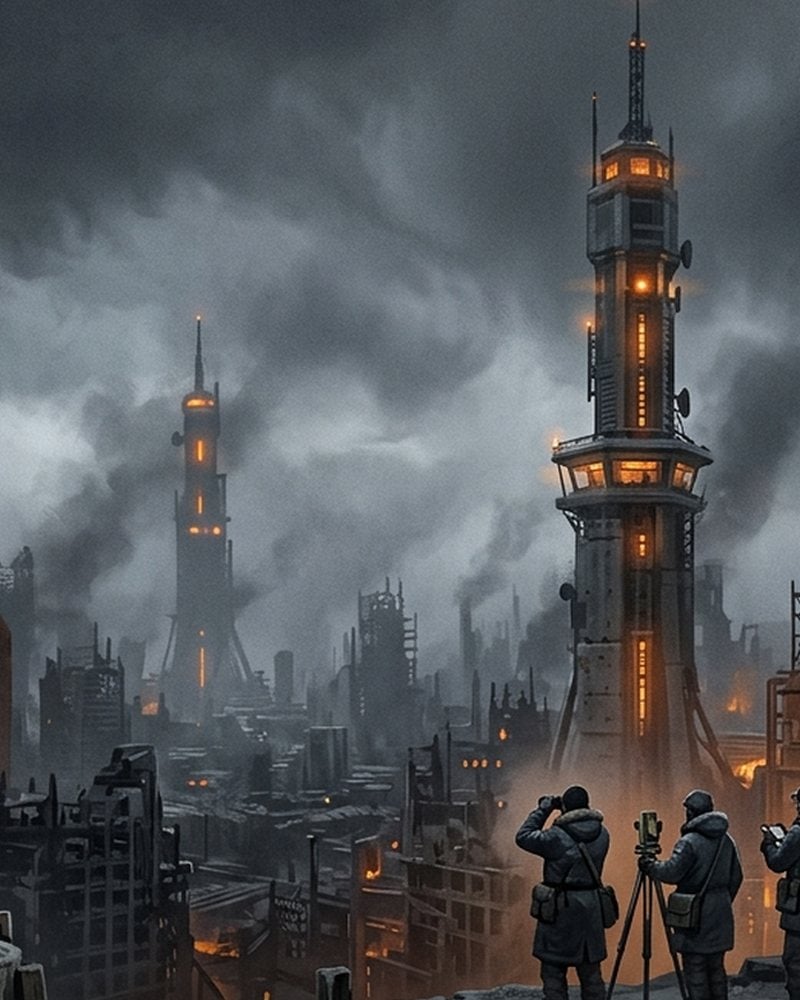
Far from the burning perimeter, the atmosphere in the outer industrial sector remained coldly clinical. High atop the weathering metal spires of the zone, Technocrat survey engineers utilized newly stabilized subterranean power grids and recently overhauled cabling networks to deploy advanced acid-rain sensor arrays. These high-altitude nodes completed their automated calibration sweeps without a hitch, ensuring uninterrupted atmospheric telemetry reporting and locking down predictive defenses to protect delicate machinery from corrosive particulate drift during chemical squalls.
Subterranean Bypass and the Iron Sinks Resistance
Beneath the surface concrete and rust, a quieter war of attrition unfolded within the flooded underbelly of the city. Capitalizing on the chaotic crowd standoff that had paralyzed the municipal filtration vaults, underground resistance operatives seized the cover of the unrest to expand their clandestine infrastructure. Working swiftly through the maze of historical drainage culverts, the smugglers installed a series of flexible polymer bypass pipes that circumvented the armed Rust Syndicate checkpoints entirely. 柏 This covert network began pouring fresh water directly into the lower slum populations, steadily undercutting the absolute water rationing monopoly maintained by the Rust Syndicate behind their quick-setting concrete barriers. As the secret streams of clean water found their targets below, the tension at the surface barriers only thickened, leaving the syndicate's enforcers facing an increasingly ungovernable underclass whose survival no longer depended entirely on their guarded valves.