
Chapter 36
The Threshold of Winter
November 20, 2142
Beneath the surface unrest outside the Iron Sinks filtration vaults, underground operatives capitalized on the chaos to lay flexible bypass lines. This clandestine pipeline began funneling clean water directly to the lower slums, steadily weakening the Rust Syndicate's ironclad distribution monopoly.
Autonomy at the Northern Caravanserai
Under the thin, pale glare of the late autumn sun, the northern fortified caravanserai hummed with the calculated friction of closing ledgers. For weeks, nomadic trade delegates and independent merchants had filtered in from the perimeter dunes, their heavily armored haulers parked within the high perimeter ramparts. As the deep freeze drew near, the assembly convened beneath the corrugated iron eaves of the central depot to finalize what southern syndicates had long attempted to suppress: an autonomous northern exchange.
The delegates worked systematically through the seasonal distribution logs. Thick folios of pressed pulp and grease-penciled manifests documented the successful transfer of hydroponic grain into the expanded regional silos. By ratifying a uniform two-percent merchant levy and locking in synchronized escort rotations along the caravan tracks, the delegates insulated their communities against winter scarcity. Every metric confirmed that the northern badlands would endure the coming cold on their own terms, without yielding to the exploitative grain quotas dictated by the southern syndicates.
Yet as the final seals were stamped onto the pact, lookouts along the northern parapets cast wary glances toward the western horizon. Scavenger bands had grown increasingly bold along the fuel corridors in recent days, and while the grain silos stood secure behind reinforced concrete, the convoys that kept the regional engines breathing would soon have to run their gauntlets through frozen, hostile sand.
The Spires Under the Acid Squall
Miles away, across the sprawling concrete expanse of the outer industrial sector, an ominous shift in the upper atmosphere disrupted the precarious quiet. A dense, caustic front swept in from the toxic wastes, rolling across the ruined manufacturing plazas like a wall of yellow-gray particulate. Within minutes, the automated intake shutters of the lower pumping houses slammed shut with heavy, pneumatic thuds, sealing against the corrosive squall.
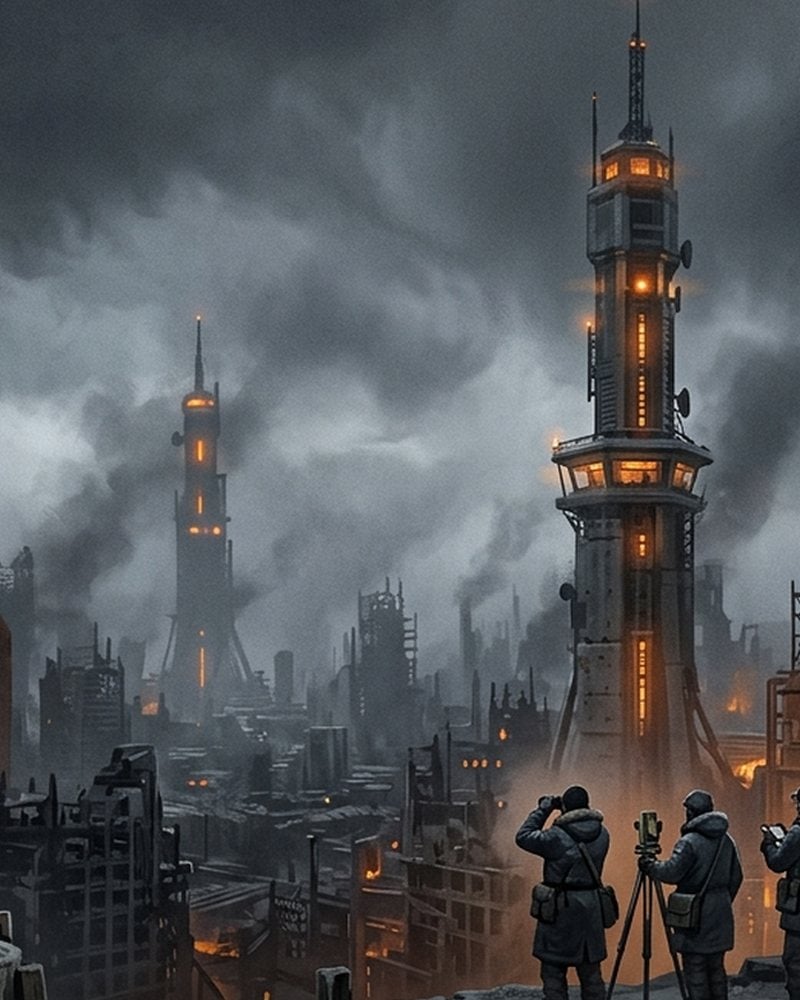
High above the factory floor, the Technocrat survey spires bore the full brunt of the storm. The automated acid-rain warning arrays, calibrated only days before, flickered furiously against the sudden surge of atmospheric ionization. Electrostatic interference crawled across the mast antennas, igniting faint halos of blue discharge that grounded into the spire ribs. In the bunker below, bank monitors danced with fragmented waveforms as sensor clusters short-circuited under the chemical barrage.
Technocrat survey engineers watched data streams fragment in real time. Packet loss spiked across secondary atmospheric telemetry nodes, blurring the predictive maps just as the toxic wind shifted south toward the residential tiers. Though the command bunker's subterranean power reserves held firm, the storm demonstrated how fragile their surface eyes remained against the wild chemistry of the poisoned sky.
Silent Flow in the Iron Sinks
Beneath the city's concrete crust, the drowned maintenance corridors of the Iron Sinks offered neither sunlight nor wind, only the steady drip of saturated bedrock and the thrum of barricaded machinery. Above, behind quick-setting concrete barricades and rusted steel bulkheads, Rust Syndicate enforcers maintained their vigilant watch over the municipal valves, their weapons drawn against a resentful population that refused to disperse. But under their reinforced boots, the subterranean architecture was slipping away from their control.
In the shadowed drainage cuts beneath Historical Junction 9, resistance operatives crouched in knee-deep runoff, checking manual pressure gauges bound to the newly expanded bypass lines. The flexible polymer pipes, snaked through century-old conduits and forgotten inspection grates, had been fully anchored. With silent, practiced turns of salvaged brass petcocks, the technicians initiated the line's first major pressure test. The dark synthetic tubing groaned, swelled, and held fast as clean water surged through the bypass, completely diverting the syndicate's locked filtration manifolds.
Miles downstream, the flow spilled into the communal cisterns of the lower slums, filling steel drums and ceramic jugs without a single ration scrip changing hands. The operatives tightened their seals and faded back into the labyrinthine sumps before syndicate acoustic monitors could triangulate the anomalous flow. But as the cisterns filled and water levels dropped inexplicably on syndicate pressure boards, it was only a matter of hours before the enforcers realized that the chokehold they guarded so violently was already hollow.