
Chapter 37
Measures Taken Before the Frost
November 21, 2142
Previously, in Last Light, underground resistance operatives successfully pressurized flexible bypass lines beneath the Iron Sinks, flooding lower slum cisterns with free water while Rust Syndicate monitoring boards registered unexplained pressure drops.
Tariffs at the Caravanserai
Within the basalt perimeter of the northern fortified caravanserai, the morning trade opened not with the customary haggling of rival cartels, but with the dry scrape of iron slate pencils across zinc ledgers. Representatives from the relocated nomadic clans stood shoulder to shoulder with independent merchant captains under the timber-framed exchange yard, watching regional assessors enforce the ratified two-percent levy. A pair of armored sentries flanked the heavy platform scales where every inbound sledge had to declare its freight.
There was little open grumbling over the cut. The standardized tariff had already proved its worth in physical terms: behind the exchange hall, the expanded granary silos stood packed with hydroponic grain, sealed beneath thick tarpaulins and mortared flagstones to insulate the settlement from southern market manipulation. Instead of hoarding dried rations against arbitrary syndicate price spikes, the caravan masters used the secured stockpile as collateral to lock in fixed valuations for technical scrap, machine fittings, and drummed tallow.
Burlap sacks of lead-acid battery plates and refined axle grease were hauled from skids to the depot floor, stamped with charcoal tallies once the administrative fee was skimmed into the garrison chest. Outside the gate towers, sub-zero mountain gales stirred dust devils across the shale flats, but for the first time since the clans had migrated north, the outbound trade trains possessed a unified armed escort schedule and sufficient rations to hold the northern trade route through the coming deep freeze.
Slurry in the Sinks
Deeper in the city's hollowed infrastructure, fifty feet beneath the dry cobbles of the merchant courts, work crews working for the Rust Syndicate were actively fighting a war of containment. The filtration vaults reeked of damp lime and curing cement. Under harsh yellow floodlamps, enforcer work details hoisted heavy baulks of treated timber, wedging them into structural ceiling joints before pouring dense, quick-setting concrete slurry directly into the secondary maintenance grates.
Pressure boards in the command bunker had signaled anomalous draw-downs for two consecutive shifts. The clandestine polymer bypass lines installed by slum resistance cells were bleeding municipal mains dry before the water ever reached the pay-spigots, and the Syndicate’s financial yields were dropping by the hour. Enforcer squad leaders prowled the elevated catwalks with carbines slung low, barking at the labor crews to double the mix rate on the slurry troughs. Every historical drainage junction that could conceal a flexible pipe was being plugged with aggregate and fast-curing binder, sealing off the maze of service tunnels behind gray, impenetrable plugs.
Beyond the perimeter wire and steel barricades, an agitated assembly of lower slum residents watched the mixers turn. Denied access to the common valves and facing crippling water scrip inflation, the crowd surged against the rusted steel forms whenever a pneumatic chute emptied its charge. Enforcers fired warning concussion charges against the damp masonry overhead, raining calcite chips onto the front ranks to drive them back from the pouring troughs. The barricades grew thicker by inches, but beneath the concrete beds, the distant thrum of water continued to pulse through hidden conduits that Syndicate probes had yet to pinpoint.
Drying the Outer Spires
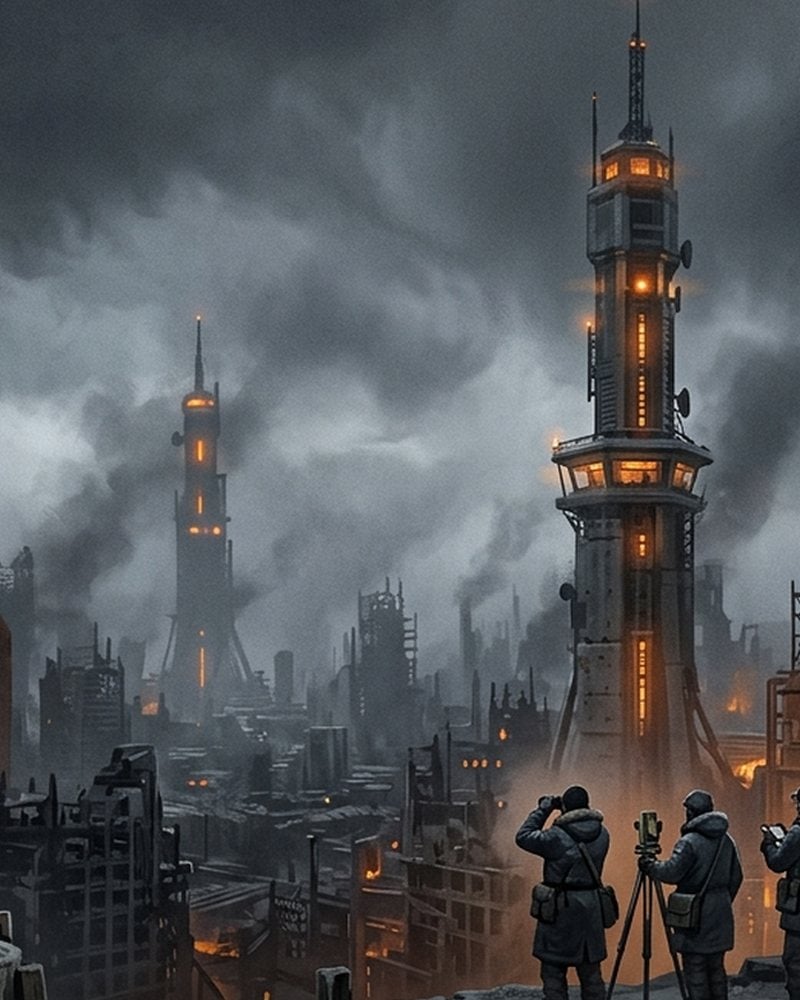
Three miles to the southeast, above the corroded sprawl of the outer industrial sector, Technocrat survey detachments worked in the teeth of high-altitude gusts. The previous day's acid squall had coated the meteorological spires in a film of corrosive grime, driving moisture into the junction boxes and inducing severe electrostatic noise that blinded the command bunker’s predictive warning relays. Technicians clung to safety lanyards around the lattice towers, systematically clearing the fouled instrumentation.
Crews clamped portable infrared heating units directly to the sensor cradles, directing radiant heat over exposed circuit pins while packing the housing seams with fresh, granular desiccant bags. Where sulfuric residue had begun to etch the delicate transducer diaphragms, maintenance runners scrubbed the contacts with solvent swabs before resealing the node housings behind silicone gaskets. Down below, the industrial basin lay quiet beneath a thin veil of chemical haze, but the restored spire telemetry soon began transmitting clean data packets back to the subterranean operations room.
Calibrated wind gauges and ambient barometric sensors spun up one by one, plotting the trajectory of secondary fronts forming along the eastern toxic border. The regional survey grid was stable again, though the readouts from the low-frequency radio channels continued to log faint, rhythmic transmission spikes from deep within the abandoned transit tunnels below the city core.