
Chapter 34
Granaries, Meteorological Grids, and Barricaded Cisterns Across the Ruins
November 18, 2142
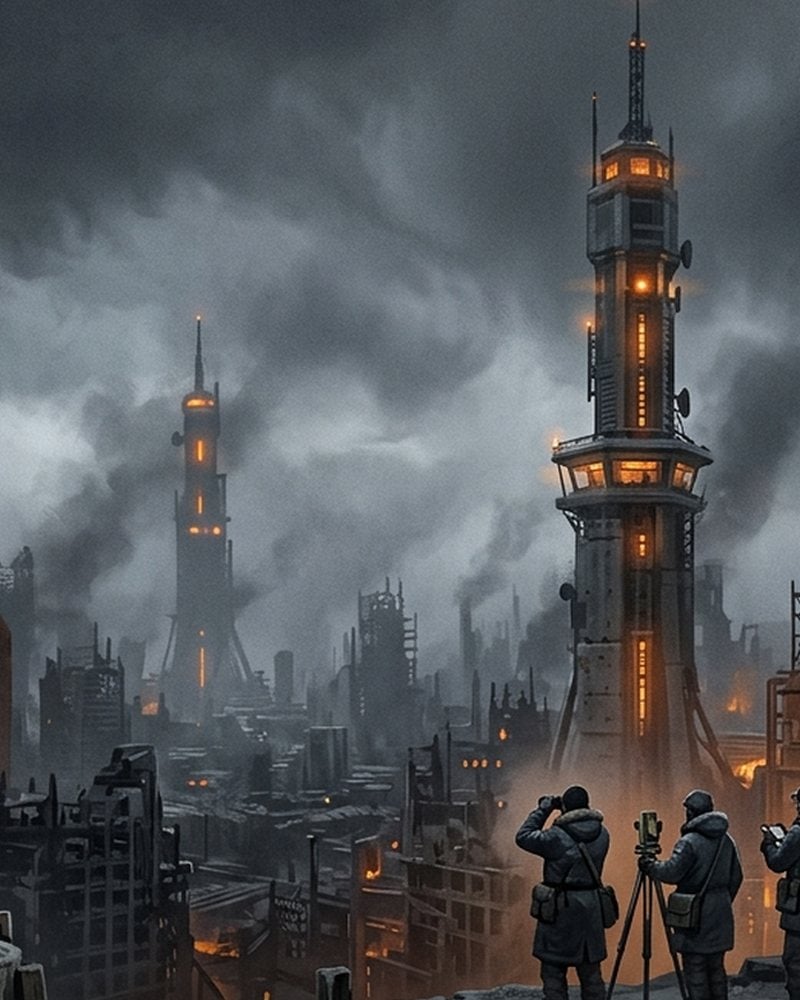
With regional hydroponic grain reserves fully stocked and independent trade routes holding firm against southern syndicate influence, regional delegates finalized the uniform winter levy and secured long-term food independence as the frost settled in.
Provisions and Atmospheric Links Across the Northern and Industrial Frontiers
Across the frozen expanse of the northern badlands, independent merchants and delegates from several relocated nomadic clans convened inside the heavily reinforced caravanserai to complete their final seasonal audits. With winter fully settling across the badlands, the verification of standardized grain levies and the successful integration of bulk hydroponic harvests into the newly expanded storage silos ensured long-term regional food security, entirely independent of southern syndicate influence. Ledger pages rustled in the cold draft as final tallies were stamped and countersigned, locking in cooperative distribution schedules for the months ahead.
Down in the outer industrial sector, working against biting winds and intermittent acid-rain squalls, Technocrat engineering detachments completed a comprehensive subterranean cabling overhaul. By rewiring auxiliary power cells directly into the primary command grid, survey teams eliminated the signal degradation caused by atmospheric electrostatic interference, restoring stable meteorological telemetry reporting to their high-altitude meteorological spires and securing uninterrupted baseline monitoring against corrosive particulate drift.
Tension at the Iron Sinks
Further toward the city's flooded underbelly at the Iron Sinks, a far more fragile balance held under the weight of cold concrete and rising desperation. Massed behind quick-setting concrete barricades, armed Rust Syndicate enforcers held their ground against a relentless crowd of local slum residents. The population, pushed to the brink by severe municipal water rationing and inflated black-market prices, refused to disperse, maintaining a tense armed vigil outside the sealed municipal water distribution barriers.
Negotiations stalled completely as shouts echoed across the damp rust-streaked walls, threatening to boil over into open street fighting. Clandestine polymer bypass lines humming beneath the flooring tiles continued to feed small amounts of fresh water around the checkpoints, but the secret flow struggled to keep pace with the sheer desperation of the crowd, leaving the barricaded cisterns primed for a violent collision as night closed in.