
Chapter 33
Static, Slurry, and Winter Ledgers Across the Ruins
November 17, 2142
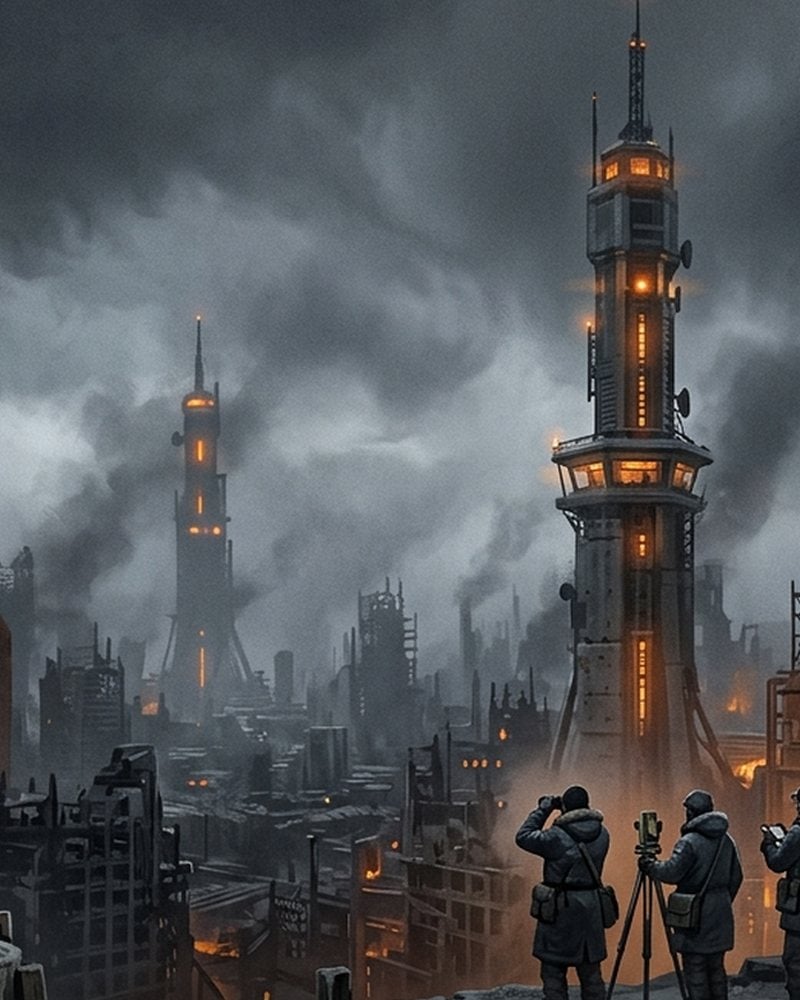
As timber supports settled into the ash-dusted soil and upgraded meteorological spires hummed with data feeds, an unresolved standoff at the Iron Sinks left the city-state balancing between automated technology and civil fracture.
Storms and Shifting Earth Across the Outer Zones
Across the jagged concrete plains of the outer industrial sector, an unexpected low-pressure acid front sweeps over the abandoned manufacturing yards, bringing a rush of stinging drizzle and turbulent air. High-altitude meteorological spires, equipped with high-tier engineering telemetry and restored sensor arrays, begin registering severe electrostatic interference as airborne particulate friction short-circuits secondary sensor clusters. Technocrat survey engineers scramble across the grated catwalks to adjust high-frequency monitoring arrays, fighting against blinding data packet loss that temporarily severs real-time atmospheric updates to the primary command bunker.
Simultaneously, along the toxic eastern border, persistent acidic drizzle soaks deep into the loose shale and ash embankments surrounding Transport Cut 4. The heavy timber shoring, thick treated timbers, rock-bolting, and heavy H-beams installed by Ashlands Guild recovery crews face an immediate test as saturated soil shifts. The sudden mass of wet earth triggers a localized slip that presses directly against the newly erected steel supports, forcing guild maintenance details to rush emergency drainage channels into the mud before the structural integrity of the corridor can be compromised.
Ledgers and Escorts at the Northern Caravanserai
Far from the damp tension of the industrial yards and eastern border trenches, the atmosphere inside the massive grain silos of the northern badlands is focused and deliberate. Independent merchants and nomadic trade delegates gather at the fortified caravanserai for their bi-weekly inventory audit ahead of the deep freeze.
With regional hydroponic grain reserves fully stocked and independent trade routes holding firm against southern syndicate influence, the assembled representatives finalize the uniform two-percent merchant levy. The delegates coordinate armed escort rotations for upcoming winter transport runs, securing long-term food independence as the frost sets in, leaving the northern frontier well-prepared while the southern sectors grapple with storms and unrest.