
Chapter 28
Telemetry, Standstills, and Seasonal Reserves Across the Ruins
November 12, 2142
Protected by standardized merchant levies and integrated caravan escort routes, frontier communities secured long-term food independence as winter approached.
Atmospheric Arrays and Subterranean Standoffs
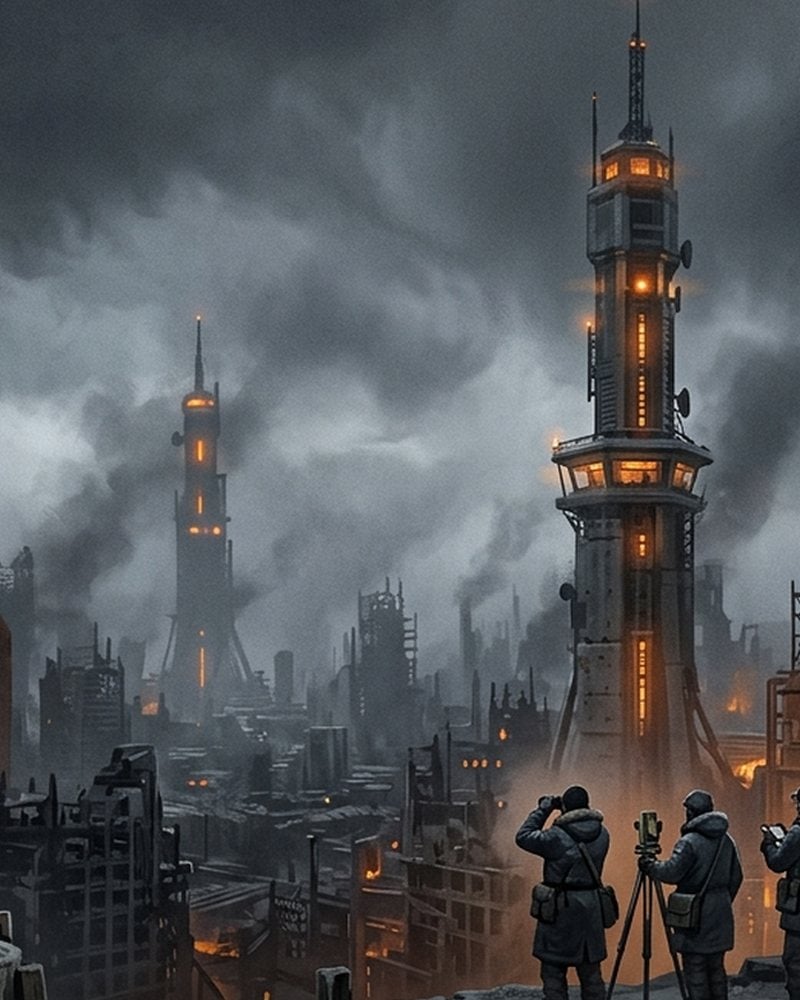
High atop the restored meteorological spires in the outer industrial sector, High-Tier Technocrat survey teams successfully integrated a newly calibrated array of acid-rain sensors into their high-altitude diagnostic networks. Despite compounding regional particulate corrosion that choked the lower ruins, the upgraded telemetry units logged uninterrupted baseline atmospheric data, securing the Technocrats' predictive awareness against toxic windstorms. Miles beneath these humming instrument clusters, however, the city's underbelly remained locked in volatile friction.
Down in the flooded maintenance vaults of the Iron Sinks, a tense armed deadlock persisted as Rust Syndicate enforcers maintained their quick-setting concrete barricades across historical drainage junctions. A crowd of frustrated slum residents massed directly before the rusted steel barricades, staring down the syndicate enforcers across the damp concrete floor. With clandestine polymer bypass pipes secretly routing small trickles of fresh water around the checkpoints, the syndicate's monopoly faced unprecedented pressure, leaving the lower maintenance tunnels caught in a razor-thin operational standoff.
Consolidation at the Northern Trade Outpost
Far to the north, beyond the caustic clouds and the subterranean tensions of the city center, the atmosphere at the regional trading post reflected quiet stability. Independent regional settlements and nomadic trade delegates finalized their initial seasonal distribution logs, systematically moving bulk hydroponic produce into the newly expanded grain silos. Protected by heavy steel reinforcement plates and the newly standardized two-percent merchant levy, these fortified food reserves guaranteed that the badlands communities were well-prepared for approaching winter caravan slowdowns, keeping the frontier supply lines strong as the cold season drew closer.