
Chapter 29
Silos, Sinks, and Spire Calibration Across the Ruins
November 13, 2142
While badlands communities secured their winter food reserves and strengthened frontier supply lines, tensions continued to simmer across the region's industrial and subterranean zones as winter approached.
Provisioning the Northern Frontier
At the northern badlands trading post, regional settlement elders and delegates from relocated nomadic clans finalized their winter provisioning ledgers amidst the hum of transport preparations. With expanded grain silos now filled to capacity and fortified by standardized merchant levies, caravans coordinated final mechanical tune-ups and steel plating reinforcements. This meticulous inventory assessment ensured that trade routes would remain traversable despite approaching frost and declining temperatures, locking in long-term food security for the independent communities far removed from the city's internal strife.
Down in the city's shadowy underbelly, however, a starkly different reality took hold as the day progressed. In the flooded, subterranean maintenance vaults of the Iron Sinks, the operational standstill between armed Rust Syndicate enforcers and desperate slum residents intensified into a dangerous bottleneck. Despite quick-setting concrete slurry barricades sealing historical drainage junctions, dense crowds of frustrated residents pressed forward, demanding direct access to the water lines that bypassed syndicate control. Syndicate squads struggled to maintain a high-alert defensive posture under dim emergency lighting, their grip on the local water monopoly pushed toward a critical boiling point.
Telemetry Across the Industrial Heights
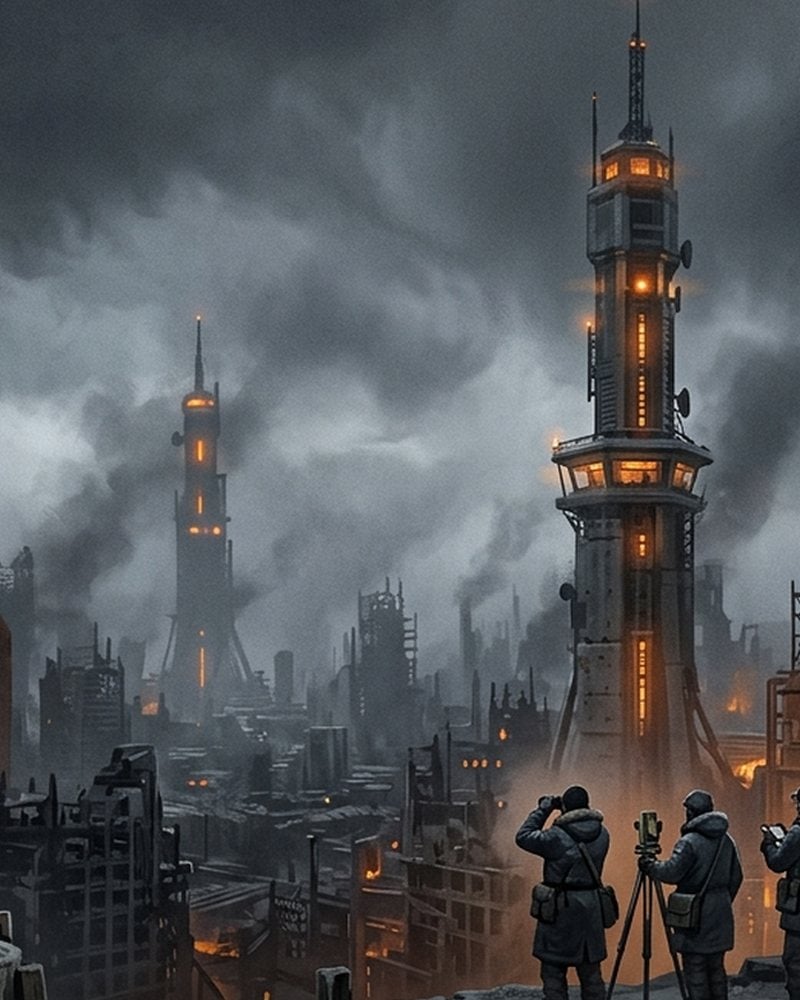
Far above the damp congestion of the lower slums and the frozen expanses of the badlands, High-Tier Technocrat engineering squads in the outer industrial sector performed precision recalibrations on high-altitude meteorological spires. Survey teams operating sensor arrays atop the restored towers executed secondary diagnostic sweeps on acid-rain sensor arrays to maintain predictive meteorological awareness. By continuously tuning sensor nodes against shifting regional particulate corrosion, the technicians secured unbroken telemetry streams and preserved vital early-warning capabilities against the caustic squalls threatening industrial machinery below, maintaining an unwavering watch as the cold season's grip tightened further across the ruins.