
Chapter 27
Ambushes, Subterranean Grids, and Northern Silos
November 11, 2142
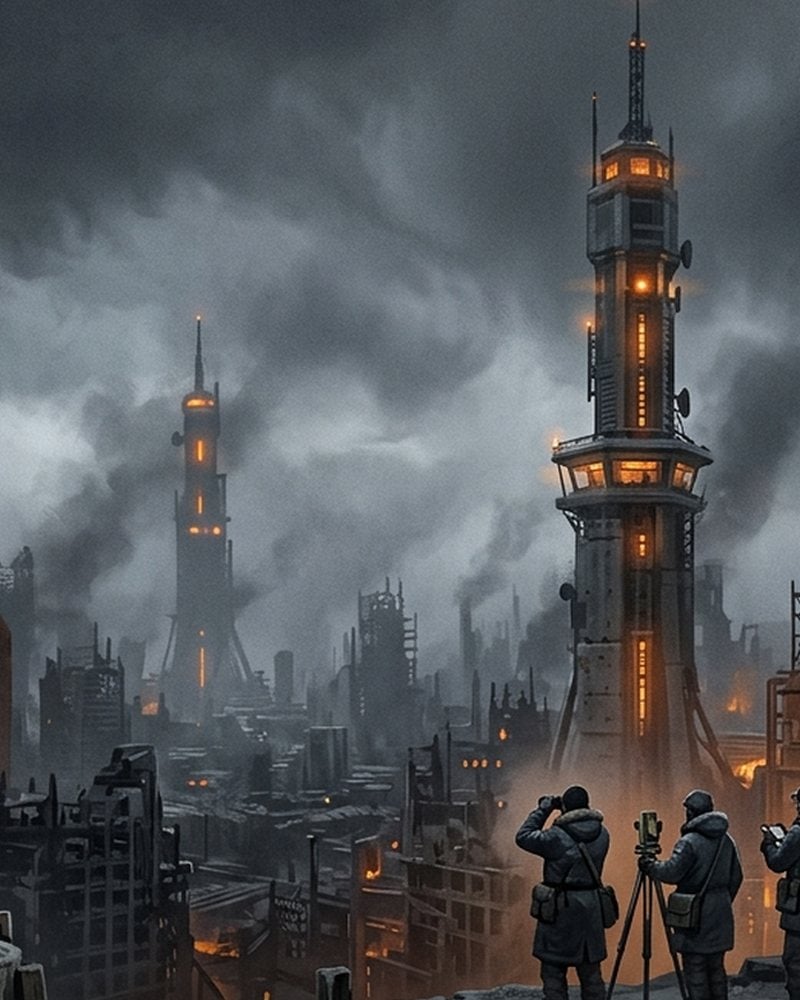
High-altitude sensor arrays atop restored meteorological spires streamed pristine telemetry feeds into subterranean command terminals, giving High-Tier Technocrats early warning to protect industrial machinery from caustic acid-rain squalls.
Western Sector Fuel Convoy Ambush
Under the harsh, unblinking glare of newly installed perimeter floodlights, the western fuel storage yards of the Ashlands Guild erupted into sudden violence. A heavily armored convoy of Ashlands Guild fuel haulers, fresh from routine transport duties, found itself trapped in an unexpected mechanized raid launched by an alliance of mobile desert scavengers. Screaming engines and grinding scrap-metal buggies broke the night as the attackers swarmed the perimeter fences.
Using improvised kinetic charges and cutting torches, the scavengers attempted to sever the main fuel feeder lines running directly into the Guild's primary storage cisterns. Sparks showered across the packed earth as garrison units scrambled to reposition heavy artillery and defensive squads from the outer watchtowers, engaging the agile raiders in a desperate firefight to preserve the remaining fuel reserves upon which the faction's regional dominance depended.
Technocrat Subterranean Grid Maintenance
Miles away from the chaotic perimeter skirmish, deep within the reinforced subterranean command network of the industrial sector, an entirely different kind of battle was being fought against decay. High-Tier Technocrat engineering squads worked in tense silence alongside blinking automated monitoring suites, tasked with replacing deeply degraded cabling tied to legacy lithium-ion power cells.
These critical pre-collapse power networks had begun showing worrisome voltage fluctuations, threatening the stability of the entire bunker complex. Through meticulous rewiring and thermal dampening, the technicians successfully averted localized grid failures, locking in stable energy supplies that secured uninterrupted encrypted relay signals and kept the outer atmospheric monitoring towers fully powered.
Northern Badlands Grain Silo Expansion
Far to the north, beyond the reach of both syndicate water monopolies and industrial grid anxieties, independent regional settlements reached a major milestone in regional self-reliance. At the bustling northern badlands trading outpost, local agricultural delegates oversaw the final bolting of heavy steel reinforcement plates onto the newly constructed regional grain silos.
Protected by the implementation of standardized merchant levies and integrated caravan escort routes, these expanded bulk reserves shielded the scattered desert communities from external coercion. As the last massive steel bolt was torqued into place against the desert wind, the frontier settlements secured long-term food independence, leaving their northern trade routes stronger and more resilient than ever as winter approached.