
Chapter 33
Shadow Protocols Across Global Terminals
January 8, 2000, 23:50 WET
As the final hours of the millennium ticked away, dispatchers at Tokyo Central Station resorted to lanterns and handwritten headway slips to manage commuter trains through dense winter fog after automated interlocking systems failed.
Subterranean Audits and Frankfurt Forensics
Inside the high-security subterranean ledger vaults of the Swiss National Bank in Zurich, senior auditor Beatrix Keller blocked access to the manual telegraph clearing terminals. Confronting three bewildered settlement clerks who were attempting to push through unverified international wire orders, Keller pointed out that the transaction metadata carried concealed 1899 date strings designed to bypass modern cryptographic authentication. The standoff highlighted the growing tension between routine manual verification and internal security directives as investigators realized the Y2K chaos covered an intentional raid on sovereign funds.
Simultaneously, beneath the glowing phosphor of emergency battery lamps, forensic IT technicians at the Deutsche Börse in Frankfurt pored over recovered transaction journals and physical punch-cards. Their analysis confirmed that the malicious administrative override script was not a random glitch or an automated rollover error, but a deliberate manual command sequence keyed into a senior architect's terminal moments before midnight. The discovery transformed the financial exchange from a scene of technical malfunction into a secured crime scene.
Continental Quarantines and Midnight Chills
Working by the yellow light of kerosene bulkhead lamps at the central Vienna exchange, postal engineers manually reconfigured the plug-board patch panels of their analog switching banks. An incoming carrier frequency, disguised with an 1899 protocol string last used by regional telegraph networks before the First World War, attempted to force open automated billing bypasses. The engineers clamped heavy brass jumper cables across the terminal blocks, effectively trapping the rogue signal in a dead-end loop for forensic inspection.
A few hours later across international circuits, in the vaulted telegraph gallery of Mumbai's primary communications exchange, signal analysts monitored banks of clicking relays as an unlisted carrier frequency pulsed through the copper trunk lines. Rather than random static or standard Y2K buffer overflow noise, the incoming transmission exhibited structured routing commands designed to mimic nineteenth-century telegraph protocols. Technicians manually severed auxiliary trunk connections to prevent the unauthorized data loop from piggybacking onto international submarine cable circuits.
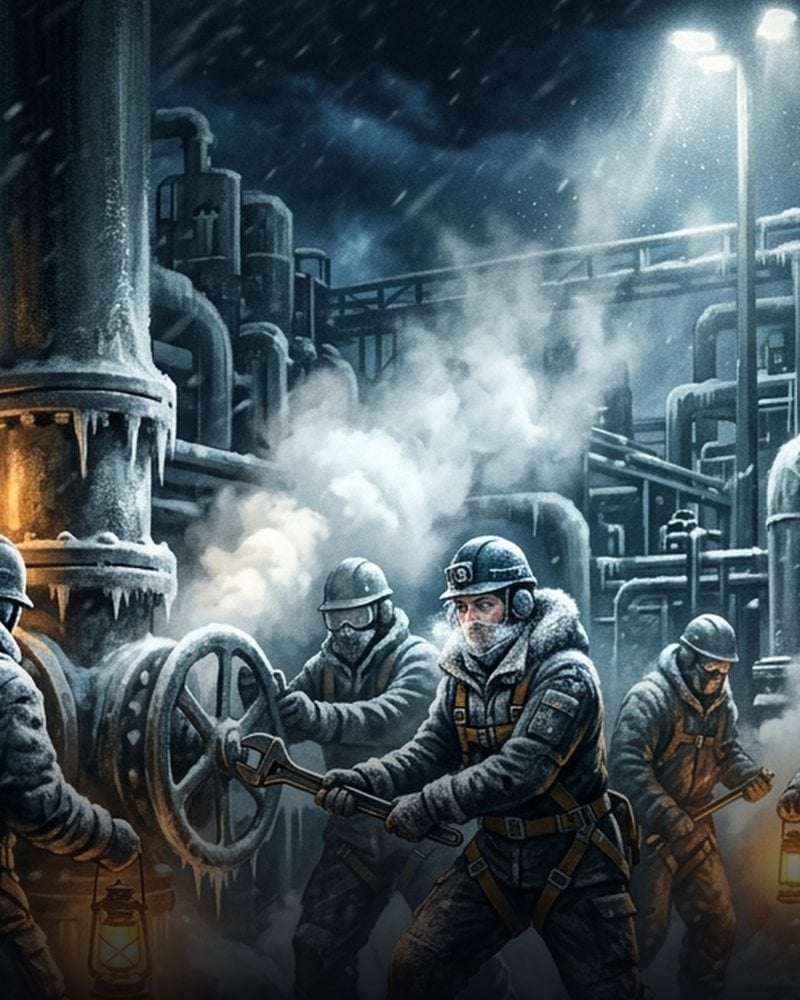
Far to the north, braving freezing winds and blinding snow outside the Reykjavik municipal heating plant, chief technician Helga Magnusdottir and her emergency crew wrenched open iron bypass hatches. Inside the turbine hall, automated temperature regulators had locked solid as their internal date counters hit unparseable millisecond values, threatening to rupture the main geothermal steam lines. Operating entirely by hand lanterns and heavy wrenches, the team maintained a precarious thermal balance against the sub-zero blizzard, keeping the city's district heating network operational as the new day dawned with quiet uncertainty.