
Chapter 32
Lantern Signals, Vault Audits, and Analog Echoes Across Global Terminals
January 8, 2000, 22:10 IST
Telecommunications technicians at the Singapore General Post Office successfully linked their improvised Morse key network with secondary coastal relays along the Malay Peninsula.
Port Congestion and Financial Tally Across Southern Latitudes
Across the bustling quays of Puerto Nuevo, a dense gridlock of idle freighters laden with frozen beef and export wheat hummed quietly beneath the morning chill. Customs officials in Buenos Aires found themselves forced to unpack decades-old paper tariff books to process docked vessels after electronic manifest verification failed completely. Customs inspector Mateo Silva oversaw a hastily assembled corps of ledger clerks who cross-referenced cargo manifests against dusty 1980s tariff volumes by candlelight, attempting to bypass frozen harbor clearing mainframes and keep the agrarian export arteries from collapsing entirely.
Several hours later, across the Mediterranean and into the sandstone halls of the Cairo Stock Exchange, directors mandated a physical audit of gold reserve vaults and paper share certificates following the total collapse of automated trading feeds. Vault guards and financial inspectors tallied physical gold bars on heavy brass scales. With the digital ticker halted indefinitely, senior administrators relied entirely on handwritten shareholder ledgers to verify ownership claims and prevent widespread panic among local merchant syndicates.
Steam Regulators, Lantern Boards, and Clandestine Circuits
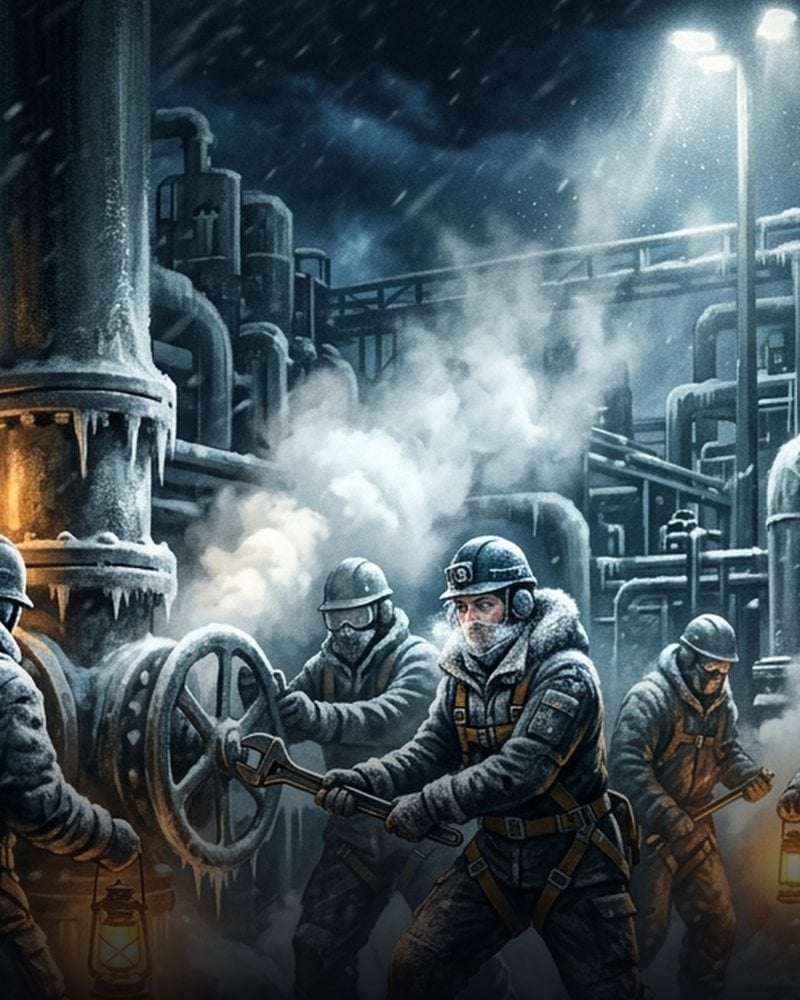
As the afternoon waned and evening settled over the northern reaches, engineers at Reykjavik's municipal heating plant faced an escalating crisis as automated temperature regulators froze in the sub-zero night. Frantic crews worked through the freezing Icelandic darkness at the municipal geothermal station, where supervisory control systems had locked up at midnight, threatening to freeze primary district heating pipes. Chief technician Helga Magnusdottir led teams from valve to high-pressure valve with heavy wrenches and manual pressure gauges to maintain steady heat flow to the city's residential quarters.
Later that night in the humming basement operations room of Mumbai's primary gateway exchange, signal analyst Priya Nair detected an anomalous carrier wave pulsing through the copper trunk lines. The unexplained analog data stream was attempting to access overseas financial circuits using vintage routing protocols. The signal bypassed modern packet switches entirely, mimicking 1890s submarine cable frequencies to query offshore bank nodes.
At the same hour in the heart of East Asia, dispatchers at Tokyo Central Station resorted to lanterns and paper dispatch boards to manage commuter trains after the automated interlocking system returned corrupted 1900 timestamps. With automated signaling relays deadlocked by unparsed century bits, veteran station masters coordinated the Yamanote and Chuo lines entirely by hand. Platform attendants waved kerosene lanterns and green flags through the dense winter mist, while runners sprinted between signal boxes with handwritten headway slips to prevent tail-end collisions as the night's final services crept through the shadows.