
Chapter 15
Manual Manifests and Sub-Zero Line Drops Across International Nodes
January 4, 2000, 11:20 CET
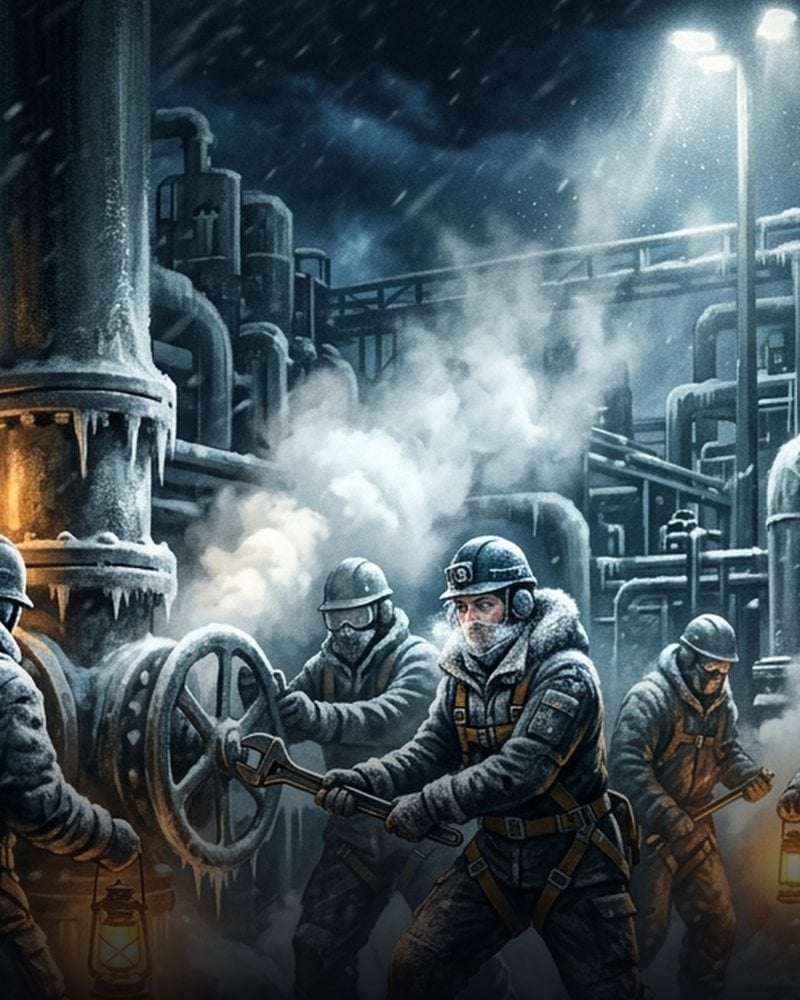
As immediate mid-air and grid disasters were manually averted, the fractured architecture of global exchange remained vulnerable, with deliberate sabotage in Frankfurt and stolen sovereign assets in Zurich hinting at a much deeper, calculated orchestration.
Pacific and Maritime Arteries Under Manual Strain
Across the southern hemisphere and Pacific littorals, the collapse of automated port logistics and navigational mainframes forced a heavy retreat into nineteenth-century methods. Down at the Port of Melbourne, stevedores brought container unloading operations to an immediate, grinding standstill. When automated port logistics server crashes forced dock management to scramble for makeshift solutions, they attempted to transition to manual paper billing. The Maritime Union of Australia branch president swiftly intervened, declaring that unverified paper tallies violated mandatory safety protocols regarding hazardous material container placement. Cargo vessels hung motionless in the bay as workers refused to touch the unvetted manifests.
Across the Pacific in Chile, the digital blackout struck the heart of maritime safety. Duty officers at the Servicio Hidrográfico y Oceanográfico de la Armada in Valparaíso found their mainframe ephemeris algorithms entirely frozen from century rollover errors. Faced with recursive date faults that threatened coastal shipping lanes, naval hydrographers pulled dusty nineteenth-century tide and astronomical tables from archive shelves. Working by desk lamp under the steady clatter of mechanical calculators and slide rules, officers calculated tide tables and navigational warnings by hand before broadcasting manual radio advisories to merchant vessels navigating the treacherous waters of the Strait of Magellan.
Financial Security and Customs Audits Across Eurasia
A few hours later, as the morning sun climbed over the Mediterranean, financial authorities in North Africa moved to contain digital breaches. Egyptian financial authorities deployed an armed military police detachment to secure the Cairo and Alexandria Stock Exchange data center following erratic ticker feed loops and unauthenticated remote access attempts. As regional exchanges struggled with date-parsing anomalies, administrators had spotted unauthorized data packets attempting to quietly alter settlement ledgers. Acting swiftly on emergency decree, exchange directors ordered the server room sealed and all external dial-up maintenance lines physically severed.
Nearly three thousand miles to the east, international transit hubs faced parallel paralysis. Customs officials at Sahar International Airport in Mumbai switched to one hundred percent physical luggage and cargo manifest inspections after automated customs clearance terminals displayed recursive error codes. With international air cargo manifests locked behind unparseable date strings, digital clearance queues were abandoned entirely. Long, winding queues of international passengers and freight forwarders formed across the arrival concourses as inspectors manually stamped paper declarations and tore open cargo crates by hand under the hum of auxiliary generator lighting.
Meanwhile, in the bitter chill of northern Europe, telecommunications infrastructure presented a mystery more alarming than mere software rot. Senior network engineer Astrid Lindholm, stationed in Stockholm, investigated an unexplained severed trunk line connecting the city's central switching hub to the newly established Reykjavik transatlantic data bridge. While monitoring the fragile data packet streams routed through Iceland, Lindholm discovered that a primary submarine fiber link had experienced a mysterious drop in carrier frequency that defied standard Y2K buffer overflows. Field crews were immediately dispatched across snow-drifted coastal vaults to inspect the repeater stations, searching for clues in the freezing dark.