
Chapter 14
Subterranean Ledger Gradients and Manual Intercontinental Bypasses
January 3, 2000, 17:15 CET
Shortly after telecommunications engineers at the Ramses exchange in Cairo successfully isolated recursive billing loops with soldered copper jumpers, financial and infrastructural systems worldwide remained locked in desperate manual recovery efforts.
Forensic Audits and Frankfurt Sabotage
Working through the night inside the Swiss National Bank's subterranean records vault in Zurich, senior auditor Beatrix Keller and her forensic team cross-referenced physical wire transcripts with corrupted database journals. Hour by hour, beneath the heavy limestone arches of the central clearinghouse, they unearthed encrypted transaction logs pointing squarely to an external shell company. These records revealed a series of unauthorized automated transactions that had executed mere microseconds before the midnight rollover, utilizing the 1899 date-string vulnerability to siphon millions in redirected sovereign funds into concealed accounts while masking the ultimate destination of the reserves.
Meanwhile, in Frankfurt, the internal investigation at the Deutsche Börse took a sharply criminal turn. Inside the locked-down computer center, digital forensics specialists analyzed recovered keystroke logs and physical access card swipes under harsh emergency lighting. They confirmed undeniable proof that the hidden administrative override script—the exact command forcing core mainframes backward to an 1899 baseline—had been manually entered hours before the century rollover from an internal terminal workstation assigned to a senior systems architect, completely invalidating any lingering theory of a natural software glitch.
Transatlantic Bridges and Sub-Zero Operations
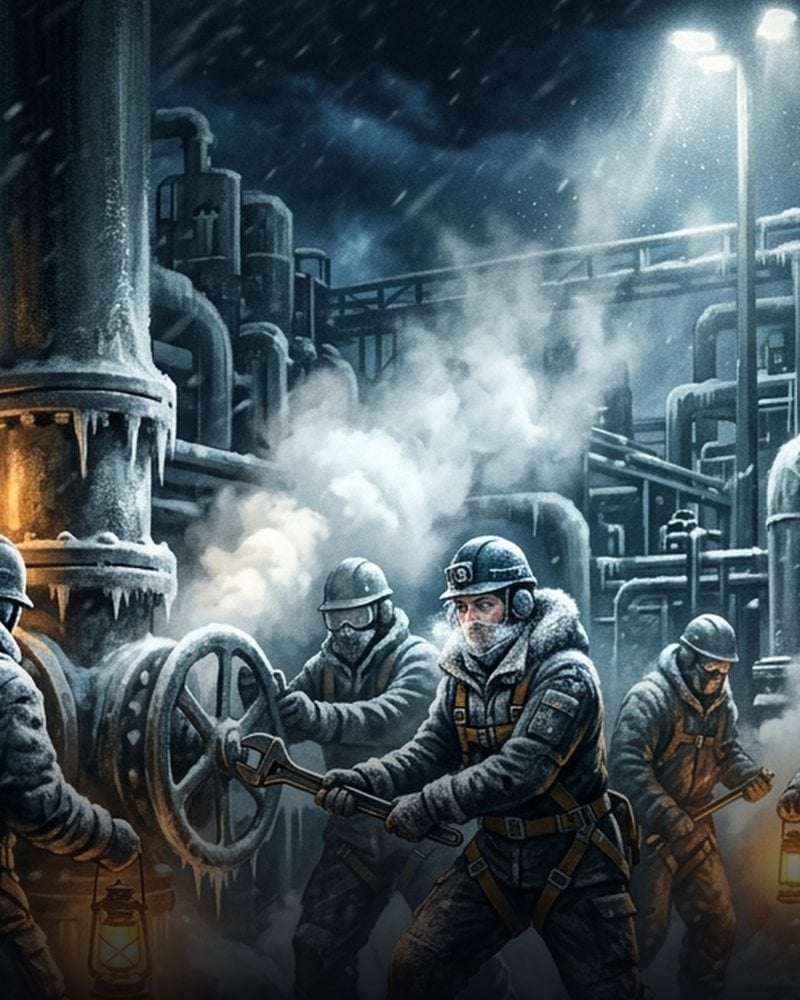
Across the cold North Atlantic at 15:45 GMT, telecommunication engineers at the remote Reykjavik landing station battled freezing winds and failing multiplexer hardware. By soldering makeshift copper jumpers directly onto damaged circuit boards, the technicians established a fragile data bridge that narrowly prevented a complete severing of financial packet exchange between Europe and North America, allowing crucial manual reserve balances to transmit before the remaining buffer chips burned out entirely.
Later that evening in Stockholm, as the local clock ticked past 17:15 CET, exhausted municipal grid technicians found brief, cynical amusement amidst the crisis. Out in the biting Swedish winter night, two junior electrical operators used a portable propane torch to thaw frozen grease on heavy-load industrial switches at an industrial district substation. Sharing a thermos of instant coffee while manually resetting a stubborn feeder to avert a capital-wide blackout, a minor slip with a wrench prompted a shared burst of dark laughter regarding the profound absurdity of bringing down twentieth-century civilization with a mere two-digit rollover.
Haneda Glass Plotting Boards
As the calendar day drew toward its close at 23:50 JST inside the crowded Haneda Airport control tower in Tokyo, illumination came only from emergency lamps and the amber glow of analog instruments. Civilian air traffic controllers and Japan Air Self-Defense Force radar officers worked in tight unison, verbally relaying altitude coordinates received from military radar installations. Through calm, methodical voice communication, they successfully spaced out converging trans-Pacific passenger flights, using handwritten logs on glass plotting boards to guide a pair of Boeing 747s safely past each other after automated altitude-encoding streams failed completely.
Yet, even as these immediate mid-air and grid disasters were manually averted, the underlying architecture of global exchange remained fractured. The discovery of deliberate sabotage in Frankfurt and stolen sovereign assets in Zurich hinted at a much deeper, calculated orchestration waiting to be uncovered as the first full week of the new millennium dawned.