
Chapter 17
Sub-Zero Feeders, Manual Rails, and Phantom Vectors Across Global Nodes
January 4, 2000, 10:30 WET
As evening fell across Japan, civilian air traffic controllers and military radar officers in Tokyo collaborated to guide incoming trans-Pacific flights entirely by hand on vertical plexiglass boards.
North Atlantic Links and Zurich Ledgers
In the cold dawn hours at the Reykjavik cable landing station, telecommunications engineers successfully soldered custom copper jumpers onto multiplexer buffer chips. Facing severe packet loss and looping buffer memory faults caused by date-stamp overflow errors, local technicians bypassed damaged integrated circuits using hand-soldered wire bridges. The improvised hardware fix successfully re-established stable low-latency packet flow across the transatlantic submarine cable before total signal degradation occurred, preserving the fragile digital lifeline between North Europe and North America.
A few hours later, working inside the secure basement records archive of the Swiss National Bank in Zurich, senior auditor Beatrix Keller expanded her forensic examination. Cross-referencing physical wire transfer slips with corrupted digital archives, she and her team uncovered encrypted transaction logs linking the 1899 date-string vulnerability directly to offshore shell accounts holding drained sovereign reserves. The audit revealed that millions in international development funds had been funneled through dormant accounts by exploiting a legacy calendar subroutine that looped straight past routine banking controls.
Midwest Skies and Nordic Frost
By late morning across the Atlantic, air traffic management faced severe stress as operating under strict manual separation protocols at Chicago O'Hare International Airport, approach radar controllers caught a ghost vector convergence between a transatlantic cargo flight and a domestic passenger service. Immediate voice radio instructions forced a steep emergency climb and vector change, preventing a catastrophic mid-air collision as automated collision avoidance systems remained completely blind due to date-index corruption in transponder return streams.
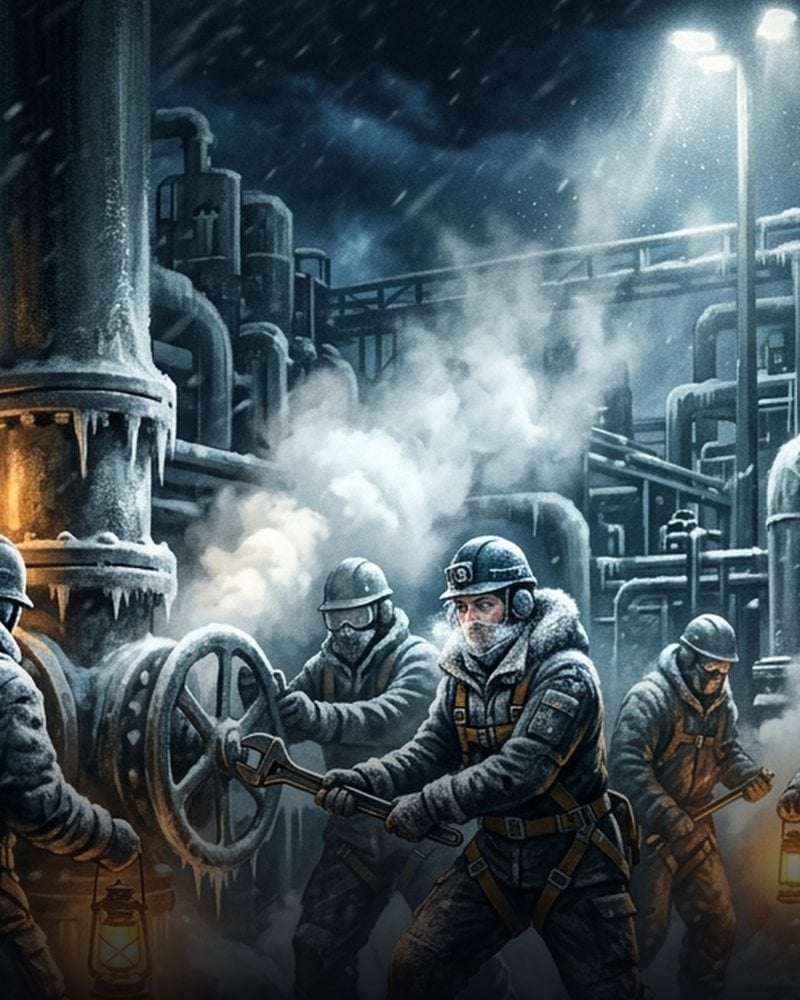
Several hours later, as winter temperatures plunged across northern Europe, Stockholm energy operators averted a capital-wide blackout by deploying field technicians to manually cycle heavy-load industrial feeders under sub-zero temperatures. Because automated substation balancing routines rejected corrupted timestamp handshakes and regional grid frequencies fluctuated wildly, municipal power engineers worked through freezing gales to physically throw high-voltage knife switches in suburban substations. The emergency manual rotation successfully isolated overloaded residential districts before transformer windings suffered thermal burnout.
Witwatersrand Freight Stalls
As evening descended over the Southern Hemisphere, railway dispatchers in Johannesburg faced a crippling infrastructure crisis along the Witwatersrand mining corridor. An unauthorized heavy industrial freight convoy—an automated ore train operating on a legacy loop freed from central interlocking signals during the midnight blackout—had coasted across three district sectors before its pneumatic braking systems failed due to uncalibrated pressure valves. Now, the stationary convoy came to a dead stop near a switching junction due to mechanical brake locking and depleted battery backups, completely blocking the primary line connecting deep-level gold extraction sites to coastal processing plants.
Deep within the Johannesburg rail control center, dispatchers scrambled to coordinate heavy-duty manual recovery crews, unaware of what other dormant automated systems might awaken as the global digital grid stumbled onward into the new week.