
Chapter 18
Diplomatic Fractures and Frozen Arteries Across European Nodes
January 5, 2000, 04:20 CET
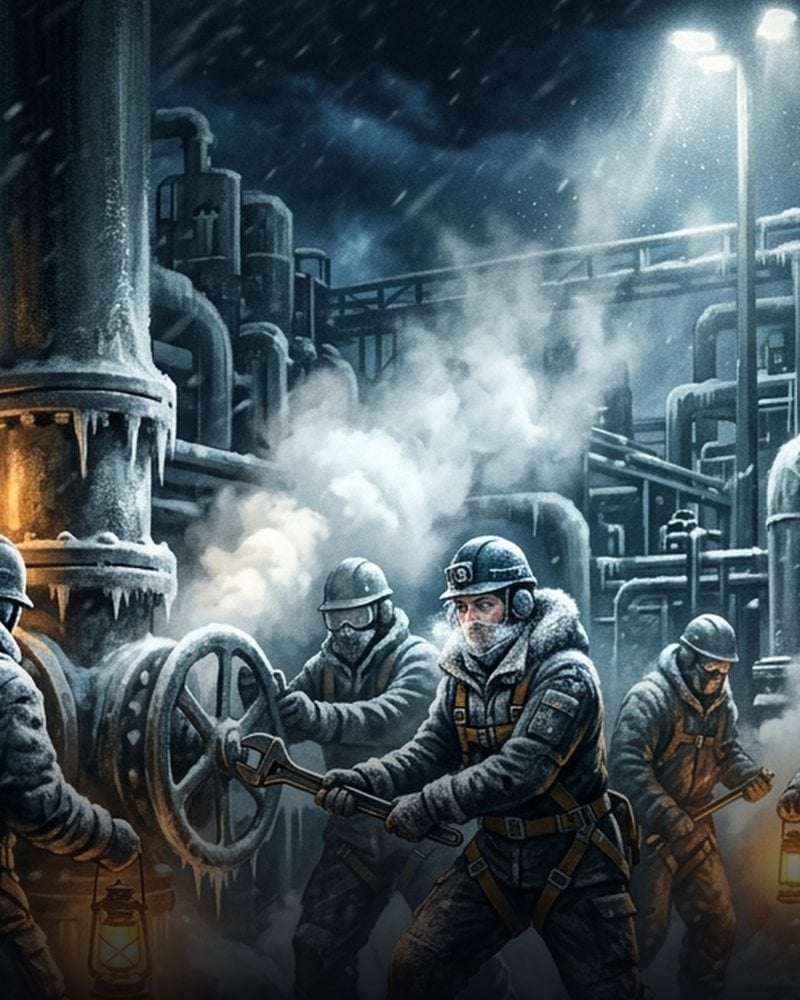
While Johannesburg dispatchers scrambled to coordinate heavy-duty manual recovery crews along the blockaded rail corridor, dormant automated anomalies continued to surface across international infrastructure.
Frankfurt and Lyon: Internal Echoes and Municipal Valves
Working under harsh fluorescent lights in the quarantined data center of the Deutsche Börse, forensic IT auditors analyzing the core settlement mainframe uncovered a hidden audit trail during the early morning hours. The timestamps confirmed that the clock rollback script was executed not by an external intrusion, but from an internal console moments before the New Year transition, narrowing the scope of the sabotage inquiry and pointing directly toward restricted terminal access logs from late December.
A few hours later, as dawn broke over the Rhône, municipal utility engineers in Lyon faced an entirely different mechanical crisis when programmable logic controllers governing the river intake pumps registered fatal non-numeric error codes, causing water pressure in high-elevation neighborhoods to plummet. Rapid intervention by on-call hydraulic technicians using mechanical bypass levers and handheld pressure gauges successfully stabilized the municipal network before widespread residential outages occurred.
Rotterdam and Northern Norway: Docks and Freezing Seas
By mid-morning along the Europoort quays, maritime trade inspectors at the Port of Rotterdam grappled with mounting cargo queues as automated manifest verification systems continued to reject unformatted date stamps from incoming transatlantic container ships. With primary electronic customs processing halted by systemic date-logic validation errors, customs inspectors resorted to painstaking manual ledger entries, leaving thousands of containers stacked on docks awaiting physical clearance and creating severe logistical bottlenecks for industrial supply chains extending deep into the European interior.
Simultaneously, far to the north off the coast of Norway, telecommunications maintenance crews aboard cable-laying vessels battled freezing spray and high seas while splicing damaged fiber optic repeaters affected by cascading power surges. Operating under severe winter storm conditions, marine technicians worked furiously on deck to replace blown repeater cards on the northern spur of the transatlantic telecommunication grid, where frigid conditions threatened equipment integrity and complicated the delicate fiber fusion splicing required to restore full bandwidth to Scandinavian data exchanges.
Geneva: Closed Doors at the Palais des Nations
As the fallout from unverified wire transfers widened across continental banking networks later that morning, representatives from major European trade partners gathered behind closed doors for an emergency roundtable at the Palais des Nations in Geneva. Tempers flared as preliminary Swiss audit findings suggested that capital flight routes passed through state-backed institutions in neighboring jurisdictions, prompting heated demands for sovereign asset transparency and mutual financial guarantees that threatened to fracture fragile regional alliances.
Delegates argued late into the afternoon over jurisdiction and liability as the true scale of the cross-border wire freezes became clear, leaving the underlying banking conduits suspended in an uneasy limbo of diplomatic distrust and unverified ledgers.