
Chapter 12
Tidal Charts and Sub-Zero Feeders Across Global Arteries
January 3, 2000, 11:30 CET
As the morning flights stacked up over Tokyo Bay on January 3, 2000, controllers relied on handwritten paper strip boards and military radar to manage the airspace, leaving operators to question how long manual endurance could outlast the silent digital void.
Maritime and Sub-Zero Interventions Along Northern Waters
Across the grey, choppy waters of the Thames estuary, the Port of London Authority expanded its auxiliary visual monitoring program as morning light struggled to break through the overcast sky. With automated tidal telemetry and computerized berth-allocation schedules locked tight on corrupted 1900 date-index formatting errors, harbor masters had little choice but to adapt. They deployed additional harbor patrols and visual observation teams out onto the river, relying on handheld VHF radio relays from patrol craft stationed near the Thames barrier to manually sequence cargo vessel docking times and manage the dense backlog of commercial maritime traffic waiting to clear the docks.
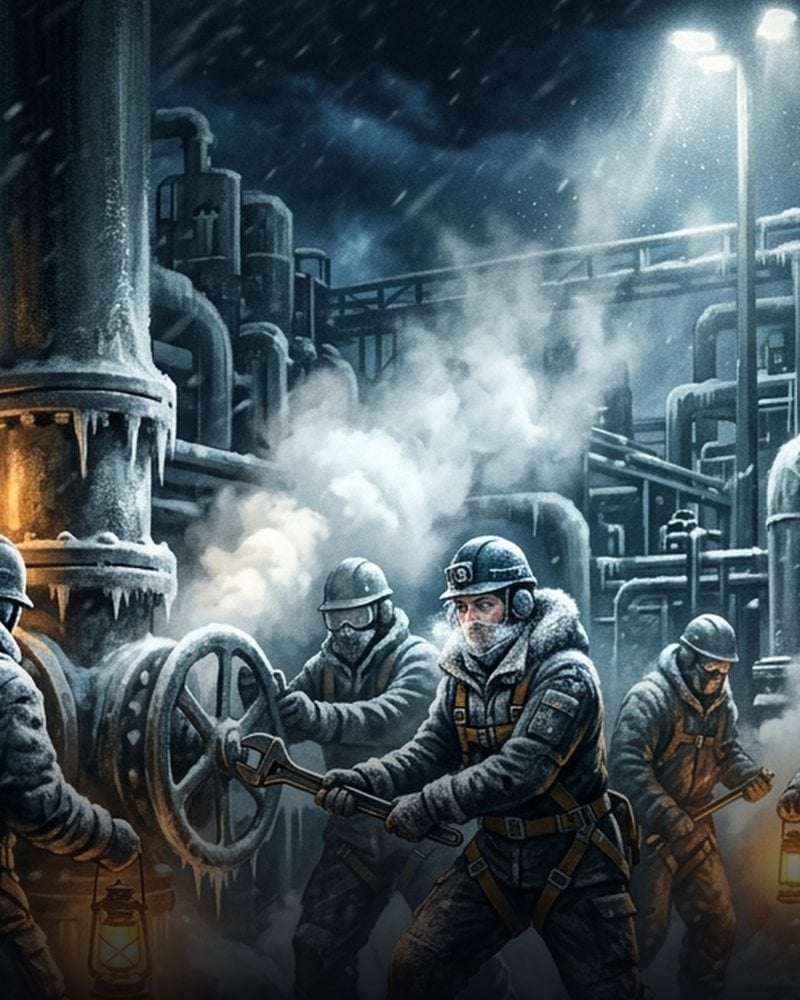
Roughly an hour later across the continent, freezing winter conditions gripped the Swedish capital, pushing electrical heating demand to critical thresholds just as Stockholm energy operators confronted a complete failure of their automated substation scheduling protocols. Zero-index scheduling faults had paralyzed the capital's load-balancing algorithms, threatening a cascading, capital-wide blackout. Bundled in heavy cold-weather gear, technicians were stationed directly at key transformer nodes, manually cycling heavy-load industrial feeders on fixed hourly rotations to stabilize grid frequency and keep the city's power alive under sub-zero temperatures.
Mining Corridors and Financial Audits Across Southern and Alpine Nodes
By late morning in the Southern Hemisphere, rail traffic inspectors in Johannesburg deployed field teams out along the sun-baked Witwatersrand mining corridor to investigate a troubling anomaly. An orphaned, unauthorized heavy mineral convoy sat completely stationary on an unpowered, isolated section of mainline track, having drifted there after widespread signal interlocking systems suffered severe data packet corruption. Communications between dispatchers and locomotive crews remained restricted, forcing inspectors to examine the dead-locked cars by hand under the blazing sun while regional transit arteries hung in a state of suspended animation.
Meanwhile, deep inside the restricted clearing divisions of Zurich's central financial district, senior auditor Beatrix Keller and her inspection team were uncovering a much darker digital footprint. Working through the aftermath of the deliberate 1899 date-string injection that had crippled international wire feeds, the audit revealed a wider, systematic pattern of manipulated sovereign asset transfers. The investigation confirmed that unauthorized routing scripts had meticulously exploited the exact same date-logic vulnerabilities witnessed in Frankfurt, siphoning high-value funds into concealed accounts just moments before automated clearing systems collapsed.
As the afternoon sun began its descent toward the equator, Public Utilities Board engineers thousands of miles away in Singapore completed a comprehensive manual calibration of pressure regulator valves across municipal water distribution vaults. Those emergency measures had been triggered earlier by century-rollover clock faults that caused automated telemetry systems to register zero-index date errors, falsely assuming a catastrophic pressure drop and slamming automated fail-safe valves shut. With the physical regulators now painstakingly balanced by hand, the municipal water network hummed quietly back to life, leaving technicians to monitor the analog pressure gauges as the first full day of the new millennium ground slowly toward its second evening.