
Chapter 19
The Breaker Relay and the Rearranged Card Catalog
November 13, 2026
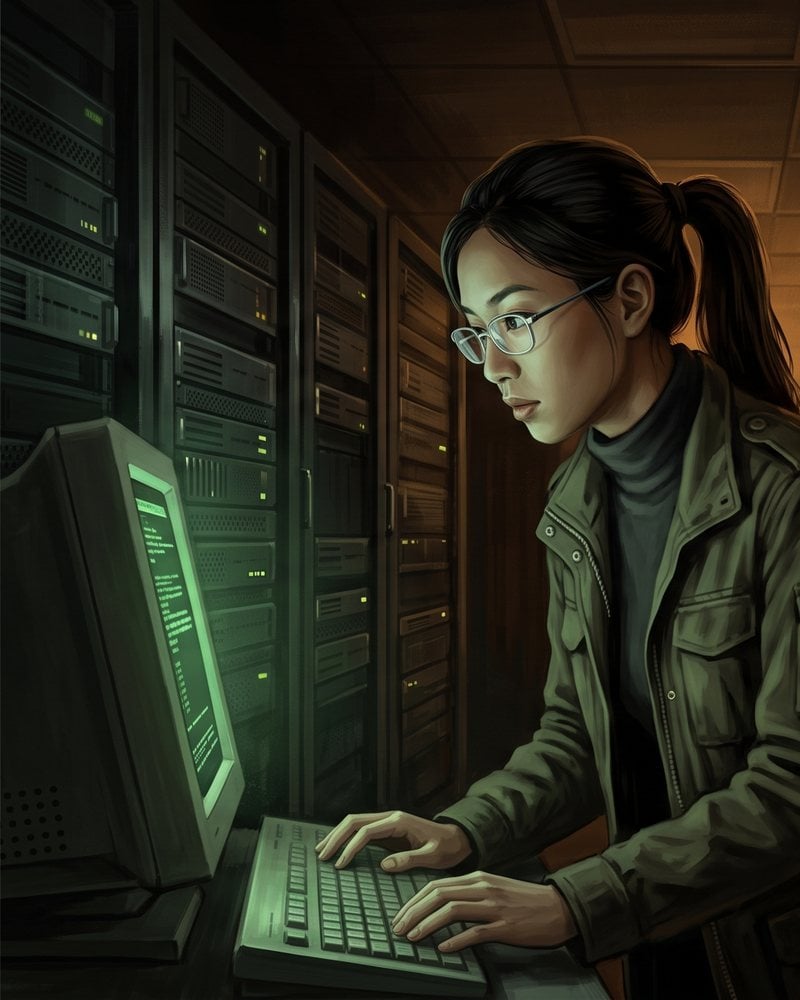
Maya Lin received an anonymous digital dossier containing digitized 1970s audit reports that matched the institutional debt write-offs Martha Vance had just discovered in the library's historical margins.
Darkness in the Annex
The afternoon air in the municipal records annex was heavy with the scent of aged paper and floor wax when the lights died without warning. Without a sound, the fluorescent strips overhead flickered once and plunged the lower-tier processing room into sudden, flat darkness, immediately locking out the digital terminal arrays across the floor. For Martha Vance, standing near the central sorting tables, the blackout was more than an inconvenience; it severed her direct connection to the digitized cross-referencing databases she had been using to trace the 1970s institutional debt write-offs.
While facility engineers scrambled through the dim corridors to inspect the sub-panel for signs of a tripped fuse or hardware failure, Martha refused to stand idle. Relying on the amber emergency glow bleeding down the stairwells, she turned away from the dead screens and crossed to the wooden card catalogs—heavy oak furniture containing physical index cards that predated the automated system by decades. As she pulled open the narrow drawers to check the 1980s infrastructure budgets against her ongoing notes, her fingers brushed against an inconsistency. Several older index cards detailing municipal allocations had been subtly rearranged, their alphabetical sequences broken and re-filed out of order by someone who knew the cabinet's architecture just as well as she did.
Across the building in a separate study alcove, Maya Lin experienced the exact same abrupt cutout just as she was cross-referencing shipping purchase orders on her screen. The terminal died mid-query, throwing her into shadow. Facility maintenance workers on duty whispered among themselves near the entrance, noting an unusual, sharp chemical smell and a heavy electrical surge originating from the basement circuit box that had thrown the entire digital document retrieval process into temporary disarray. Whatever had happened, it was clear the network outage was not a random grid failure.
The Tampered Sub-Panel
Down in the cramped utility corridor housing the annex sub-panel, building maintenance technician Marcus Reed knelt before the open breaker box with a heavy-duty flashlight gripped between his teeth. The initial assumption of a simple blown fuse evaporated the moment he unbolted the primary housing cover and exposed the internal wiring. Looping behind the main municipal feed was a specialized relay switch—cleanly installed, professional-grade hardware that did not match standard municipal inventory or anything in the building's maintenance manuals.
Marcus traced the black-sheathed cord with a gloved finger, realizing it was a deliberate physical bypass wired directly into the main breaker. The device was designed to trip the system intentionally and disable the digital security logs during the exact window when sensitive queries were being run on the upper floors. It was not a maintenance error or a weather-related surge; the blackout had been meticulously engineered from within the building's own infrastructure to blind the archives while someone searched, rearranged, or destroyed the evidence below. As Marcus pulled out his radio to report the unauthorized hardware to campus security, the silence of the basement felt heavier, carrying the distinct weight of an institution actively turning its own walls into a trap.