
Chapter 13
The Pencil Annotations and the Master Freight Schedule
November 5, 2026
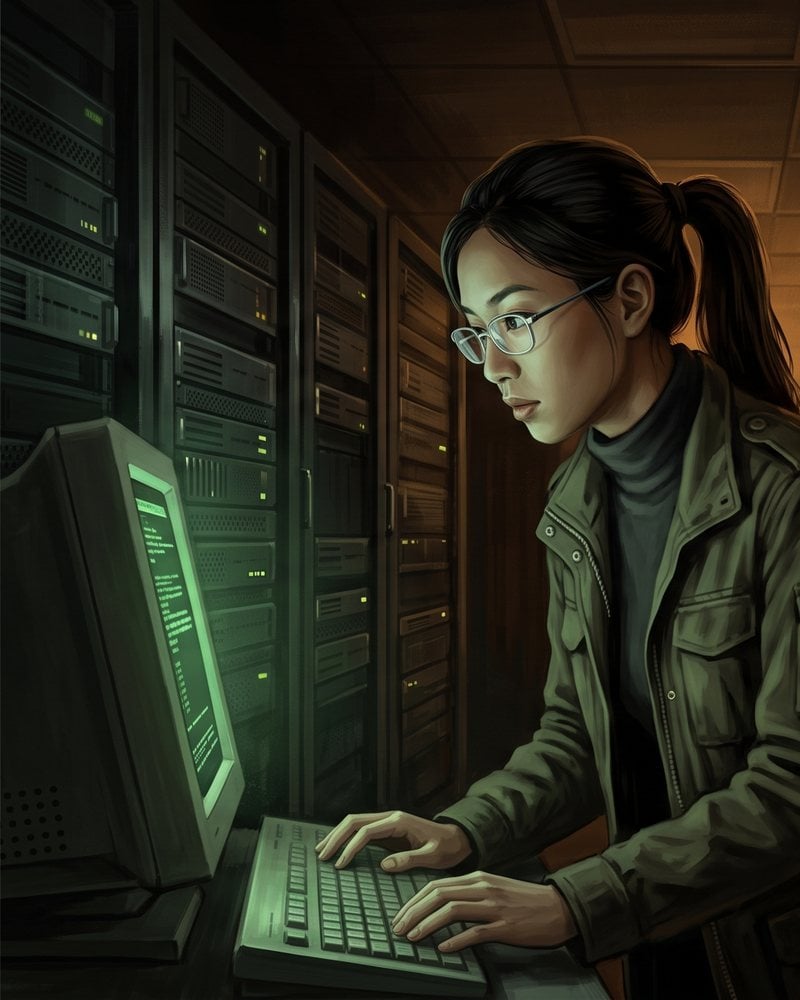
Clara Vance narrowly avoided an unfamiliar administrative auditor in the library basement, only to find the disputed municipal volumes left askew and signaling that someone else was hunting for the exact same ghost history.
Erasing the Past
Working late under the low humming fluorescent lights of the library basement, Clara Vance carefully reviewed the shelves adjacent to the disputed holdings. While examining a heavy ledger from nineteen-eighty-eight, she stopped, her gloved fingers brushing against something unexpected. Neats, modern pencil annotations detailed cross-references that did not appear anywhere in the university's official digital catalog, indicating that someone had been actively annotating and organizing the altered volumes directly on-site.
Frowning at the clean graphite lines, Clara held the pages closer to the overhead glare. Inspecting the paper fibers under a pocket magnifier, she realized the pencil marks pointed directly to a systematic pattern of alterations. Unmistakable chemical residue dulled the paper's sheen, revealing where original text had been meticulously washed away with ink eradicator before being overwritten with fabricated histories predating the mid-eighties zoning disputes.
The Master Route and the Sub-Basement
Across campus, campus courier Gabriel Vance found himself sidelined by the university's newly tightened security directives, left waiting in a sterile faculty corridor while his stranded delivery crates remained sitting outside Dr. Finch's office. Spotting an unguarded moment when the loading supervisor stepped away, Gabriel slipped into the loading dock office. Pinned to the supervisor's corkboard was an active master freight routing schedule detailing clandestine evening drop-offs scheduled for the off-campus commercial bindery. He drew his phone, capturing the manifest details before anyone could return.
That same night, deep beneath the administrative wing, University Provost Julian Thorne moved quietly through the dim sub-basement corridors. He unlocked the heavy service door to the university bindery workshop for an unannounced inspection. Under the pale fluorescent hum, Thorne reviewed the physical maintenance logs and checked the serial numbers on the heavy commercial stitching and binding presses, searching for direct, undeniable evidence of how institutional equipment had been co-opted to produce the counterfeit volumes. As the hum of the machinery settled into absolute silence, the trail of institutional complicity only seemed to widen.