
Chapter 23
The Climate Override and the Rerouted Manifest
November 18, 2026
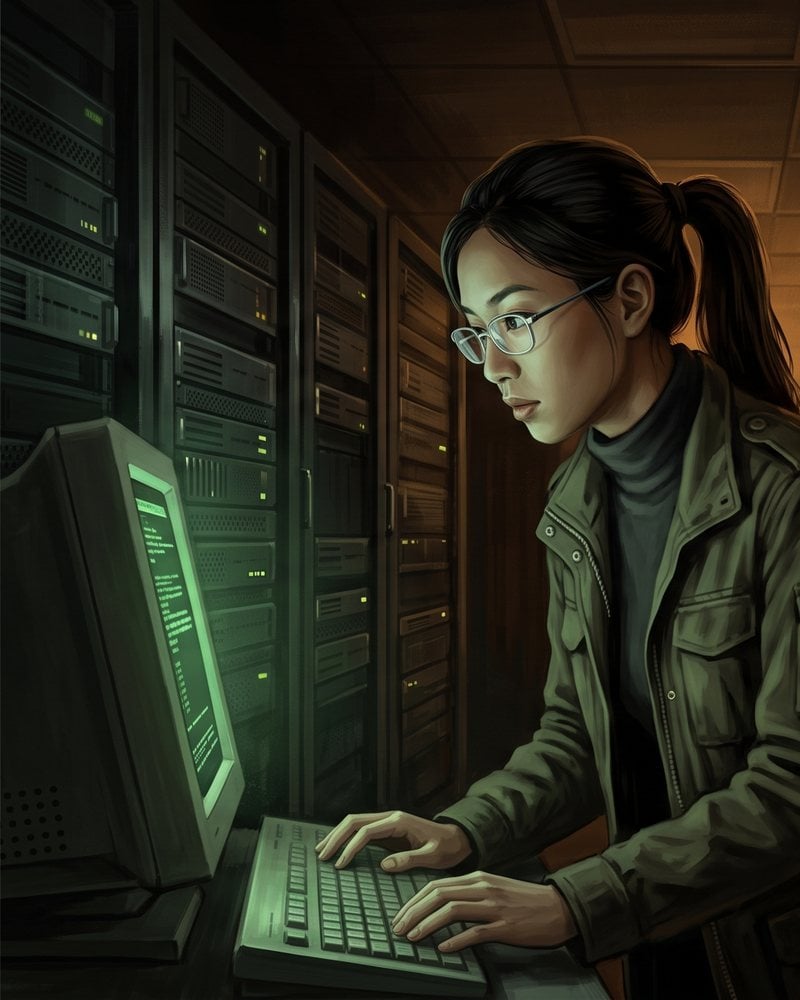
As state inspectors flagged modern synthetic bindings in the municipal water board offices, tangible evidence of a generation-spanning fraud began mounting against the university's administration.
The Nocturnal Override and the Bindery Discovery
The night air hung heavy over the campus, carrying a cold mist that glazed the brick pathways and frosted the upper windowpanes of the administration building. Deep within the watchroom of campus security, a solitary dispatcher blinked through the quiet hours, monitoring the scrolling array of facility reports. Buried among the routine power metrics and door-ajar pings sat a peculiar anomaly: an unscheduled, manual override logged precisely at midnight on the Special Collections climate control sub-panel. The digital fingerprint showed a deliberate physical intervention directly on the hardware in the basement corridor, yet checking the physical sign-in sheets for that restricted wing revealed an absolute blank. No authorized security staff or catalogers had signed out the keycard for that sector during the affected hour.
Morning arrived with a pale, washed-out sun struggling to pierce the autumn overcast. Down in the subterranean depths of the Special Collections bindery vault, Clara Vance and Maya Lin bent over a glowing terminal, cross-referencing the night's automated environmental data against the physical ledger inventory. The truth crystallized with stark clarity under the harsh fluorescent tubes. The manual override hadn't been an accidental equipment fault or a routine calibration; it had been an intentional, calculated atmospheric adjustment. By manipulating the climate controls ahead of time, someone had deliberately masked the sudden humidity and temperature fluctuations that would otherwise have been triggered by the rapid extraction of several heavy, moisture-sensitive municipal volumes from their sealed casing units. The institution was not merely hiding its paper trail—it was actively managing the physical crime scene.
Diverting the Freight and Closing the Vaults
Across town at the campus distribution hub, miles away from the quiet tension of the university vaults, Gabriel Vance sat behind the wheel of his idling truck. On the dashboard before him rested the anonymous, threatening photographs warning him to drop his inquiries into institutional shipping schedules. The implicit danger hung heavy in the cab, yet instead of backing away from the logistics web, Gabriel made a sharp, calculated pivot. When the morning manifest rolled across his sorting desk detailing another bulk institutional delivery destined straight for the off-campus commercial bindery, he made his choice. Rather than letting the crates slip quietly into the shadow economy of the university's supply chain, he quietly intercepted the paperwork, rerouting the scheduled delivery vehicle away from its usual route and toward a secure, private storage locker where he could pry open the crates and examine the falsified contents himself.
That afternoon, the administrative counter-offensive landed across every department in a flurry of digital alerts and printed notices. Responding directly to the expanding fallout from the state water board inspections and the unauthorized manual overrides in the library, Provost Julian Thorne issued an emergency campus-wide directive. The memo was crisp, authoritative, and sweeping: effective immediately, all evening, weekend, and out-of-hours access to basement archives, climate sub-panels, and special collection vaults was strictly suspended under the official guise of facility security upgrades. Security guards were instructed to lock down sub-level corridors at sundown, effectively pulling a steel curtain over the underground stacks. Yet as the heavy deadbolts clicked into place across the campus, the tightening administrative grip only served to confirm to Clara, Maya, and the Vance brothers that the university had something massive left to hide—and that the race to secure the remaining physical evidence had just entered its most dangerous phase.