
Chapter 21
Telemetry, Fault Lines, and Northern Levies
November 5, 2142
As grain silos were reinforced and merchants tallied their ledgers under caravan guard, the low hum of legacy Technocrat power cells served as a reminder that stability in the ruins is balanced on a razor's edge.
Industrial Skies and Subterranean Faults
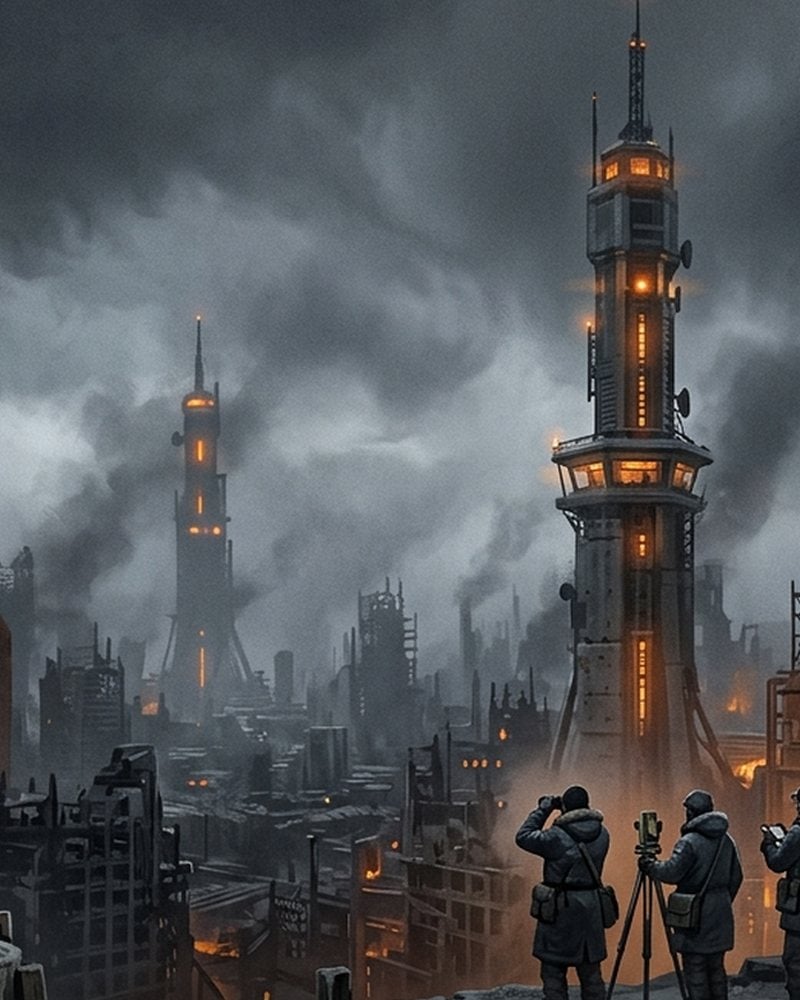
High-Tier Technocrat survey and engineering detachments deployed high-frequency diagnostic routines across all scrubbed weather-monitoring nodes spanning the outer industrial sector. Building upon the recent restoration of the dilapidated outer weather towers, the engineering teams successfully locked in advanced calibration sweeps that achieved unprecedented signal clarity. The pristine telemetry feeds now streaming directly into subterranean command networks grant the Technocrats unmatched predictive awareness over approaching toxic windstorms, securing a major informational advantage over rival regional factions.
Meanwhile, along the toxic eastern border, specialized Ashlands Guild survey units deployed seismic probes to chart hidden underground voids. In the wake of recent subterranean instability and catastrophic cave-ins, these teams worked methodically to map fragile fault lines and reinforce vulnerable transport corridors. By systematically shoring up these subterranean passages, the Guild aimed to protect vital supply lines and prevent further collapses from crippling their remaining logistical networks.
Commerce and Harvest in the Badlands
Far from the humming industrial towers and the unstable eastern fissures, the northern badlands trading post entered a new phase of economic consolidation. Following the formal consensus between nomadic clans and independent caravan leaders, officials at the outpost initiated active collection of the standardized two-percent merchant levy. The gathered capital was immediately channeled into reinforcing regional defense structures and performing essential maintenance on the cooperative hydroponic grain silos, cementing the outpost's economic self-sufficiency as desert caravans continued to trade salvage for fresh water and hydroponic produce under the watchful eyes of local guards.