
Chapter 16
Grid Surges, Tariff Debates, and Sinks Counter-Blockades
October 31, 2142
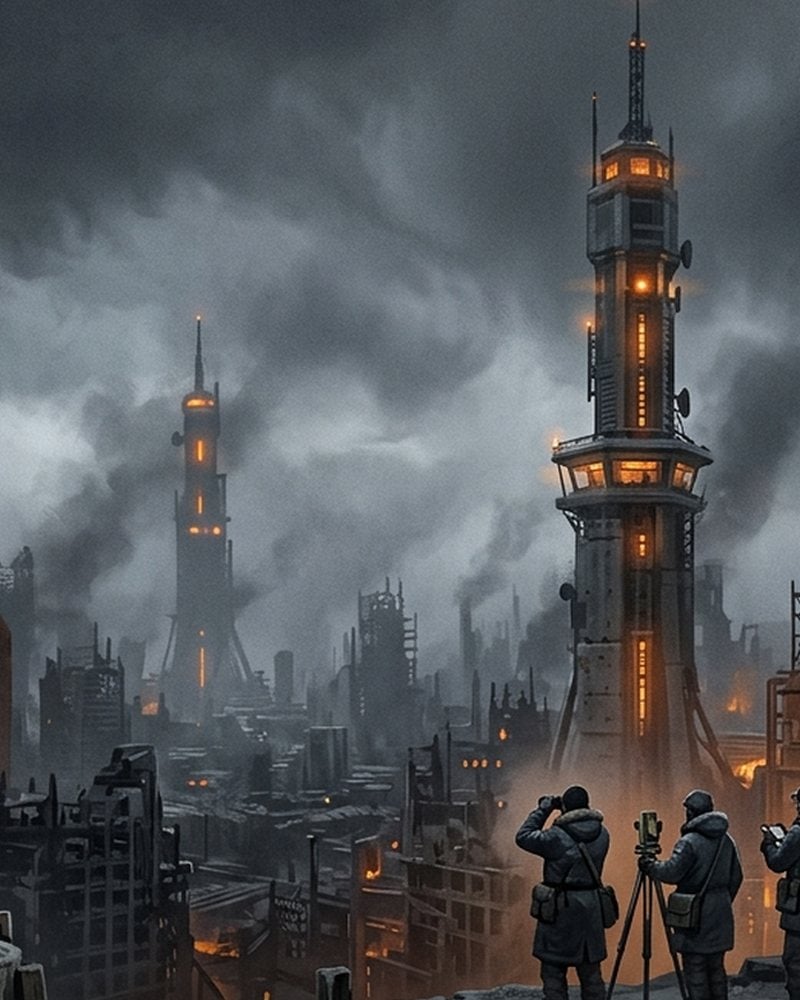
While independent desert caravans transformed the northern badlands into a bustling regional trade hub, the old syndicates watched their grip on the city's lifelines slip further away.
Subterranean Surges in the Industrial Sector
Deep within the newly stabilized industrial sector, High-Tier Technocrat engineering squads found themselves locked in a sudden, sweat-soaked battle against their own power grids. The high-capacity pre-collapse lithium-ion cells, recently wired into the primary command bunkers, began to react unpredictably to baseline humidity spikes creeping through the concrete vaults. Violent voltage surges raced along the copper conduits, threatening to fry the newly restored weather-monitoring telemetry feeds that had only just brought the outer industrial sector back online.
Technicians scrambled through the damp subterranean junction vaults, shouting over the metallic hum of overloaded capacitors as they fought to manually override and recalibrate the automated fail-safes. Every flickering monitor and spitting spark-gap risked plunging their newly regained sensors back into darkness. Through sheer speed and disciplined load-shedding, the engineering teams managed to damp the erratic power fluctuations just as the core temperatures reached critical thresholds, securing their command networks against total failure.
Tariffs and Tensions in the Northern Badlands
Far to the north, where recent agricultural harvests and an unprecedented influx of merchant caravans had turned the remote desert outpost into a thriving market town, a different kind of pressure was mounting. Inside the fortified trading post, leaders of the nomadic clans and independent fringe scavengers convened for a tense council. Having ratified their mutual defense pact, the assembly now faced the friction of economic governance: whether to institute standardized exchange rates and formal merchant taxation across the board.
Voices clashed beneath the vaulted corrugated steel of the meeting hall. Some elders argued that a unified tariff on incoming scrap and water trade was essential to fund regional defense and upkeep, while dissenting factions warned that heavy fees would choke the very commercial lifeblood that had just liberated them from southern dependency. The debate stretched on for hours, a high-stakes test of the coalition's unity as merchants and caravan masters watched anxiously from the perimeter stalls, waiting to see what rules would govern the northern frontier.
The Iron Sinks Counter-Blockade
Down in the shadowed, dripping depths of the Iron Sinks, the Rust Syndicate struck back against the relentless erosion of their water monopoly. Stung by the successful expansion of independent black-market distribution networks through secondary overflow pipes, syndicate commanders deployed heavily armed enforcer squads backed by heavy mechanical pumps and truck-mounted mixers of quick-setting concrete slurry.
Working beneath the lower slums, the enforcers moved methodically to seal off historical drainage junctions and choke the clandestine polymer hoses feeding water to the populace. The operation immediately drew angry crowds of slum residents and defiant black-market operators who mobilized along the rusted catwalks, shouting warnings and throwing debris at the barricade crews. As concrete hissed into the ancient intake pipes, the fragile peace of the lower districts fractured completely, setting the stage for open confrontation over every drop of water.