
Chapter 40
Sounding the Low Water
Autumn of the 314th Year of the Crown
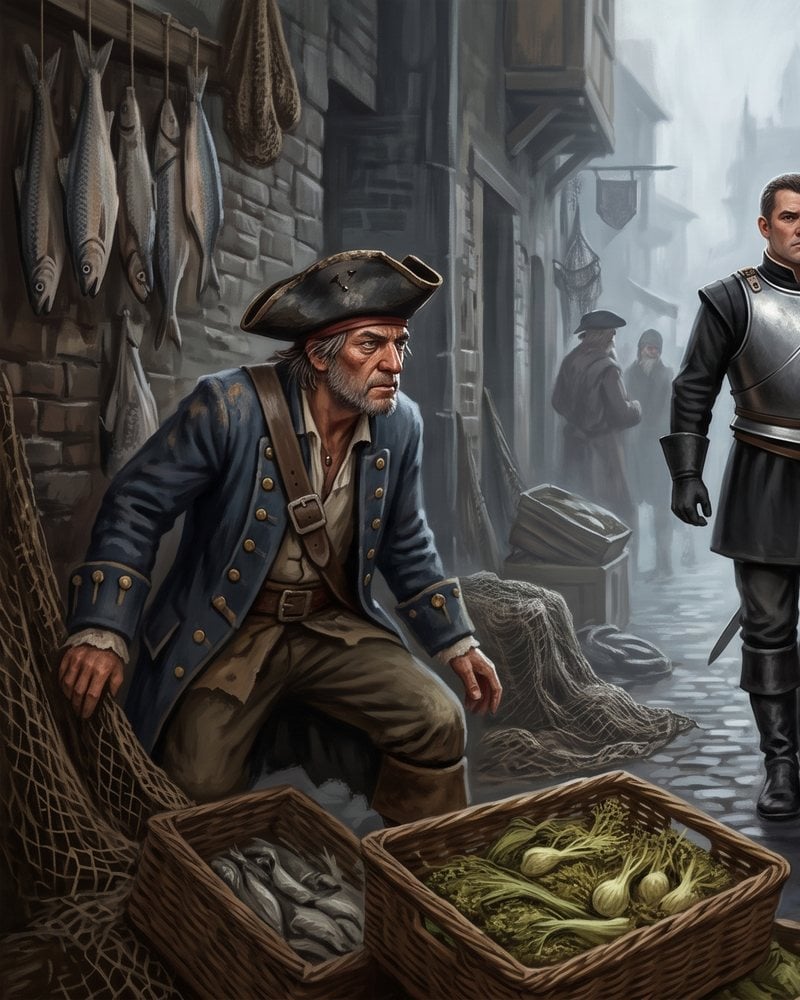
Quartermaster Pip's whistle by the salthouse conduit had steered the crew away from the fish stalls and down toward the murky timber moorings of the drainage pier, just ahead of the search patrols.
The arch of the lower drainage pier crouched so low against the canal that Captain Bramblefoot had to tuck his chin into his damp doublet to avoid scraping the brickwork. Beneath them, the tide was little more than a sluggish brown grease, lapping against rotting timbers and smelling of bilge, discarded shellfish, and tannery run-off. Above, through the street-level iron grating, the shouts of the tax watch and the brassy blare of patrol horns rang across the stone quay, muffled only by the thickness of the vaulting.
Quartermaster Pip sat huddled on a slimy stone ledge, his damp fishing waders squelching each time he shifted. With the edge of a bent copper bodkin, he was trying to scrape dried mill-flour from the seams of his sodden leather boots, grumbling under his breath whenever a fleck fell into his lap. Beside him, Jory held the heavy ox-hide ledger clamped under one elbow while cradling the green-glass jar against his ribs with both hands. Inside the thick glass, the subterranean crystal root pulsed with a pale, steady radiance, casting pale emerald rings across the greasy brick ceiling.
Barnaby, whose tolerance for foul muck had already been proven when he fished their dropped packs out of the upper gutter, tried to ease his broad back against the retaining wall to let blood return to his legs. In doing so, his elbow struck a protruding mass of rust. A heavy iron mooring ring, pinned to a rotted pine upright by an ancient bolt, gave way with a dry groan of splintered wood. Before anyone could snatch at it, the iron plunged into the stagnant water with a hollow, echoing plunge.
The noise boomed along the vaulted canal like an iron mallet struck against a brew-kettle. High above on the parapet, the rapid scrape of hobnailed boots ceased instantly. A gruff voice bellowed an order toward the lower sluice gates, followed by the clatter of a halberd butt ringing against flagstones.
"Master Barnaby," Bramblefoot whispered through clenched teeth, his hand flying to the hilt of his cutlass, "if you feel the urge to dismantle any further harbor infrastructure, pray give us a moment's notice to jump."
Barnaby pressed his palms flat against the wet wall, sheepish and rigid. Before the ripples from the dropped iron could flatten against the mud, the murky water gave a strange, sucking heave. The canal's tide, forced backward by the closing of the upper mill sluices, swirled around the pilings in a sudden surge. Bobbing on the muddy crest came a rectangular shape—a waterlogged wicker crate, its lid corded with frayed hemp, floating sluggishly toward their ledge.
Jory snagged the wicker rim with his free boot, dragging it against the stonework before the current could carry it under the darker recesses of the arches. Captain Bramblefoot knelt, slit the sodden twine with his belt knife, and flipped back the cover. Inside lay an assortment of confiscated dock tools left behind by municipal bailiffs: a heavy, squared claw-hammer crusted with dry salt, a chisel with a chipped horn handle, and a ball of grease-blackened tallow rags wrapped around spare iron spikes.